Off-line gantry laser welding / BLP-WG — four-axis, stand-alone
Every Other Machine We Quote Is Bound To Your Takt. This One Is Bound To A Table.
A four-axis gantry, a source you select between 1000 and 6000 watts, and a working envelope that ends where the travel ends. It has no station number, because it does not stand in a line.
⚠️ Every figure on this page is about the machine. None of them is a promise about a weld — that distinction is the subject of section 10, and it is why this page carries no strength figure at all.
The machine, and the two lists that place it
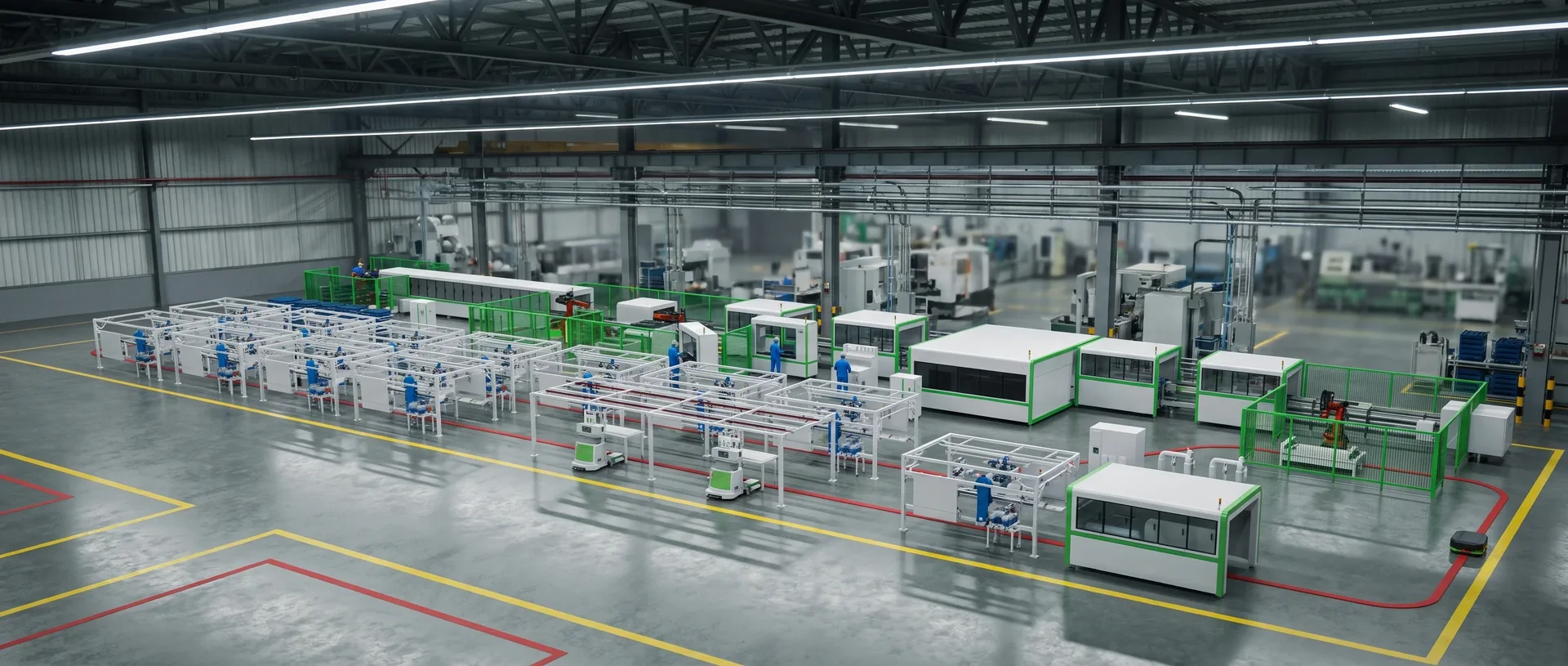
- A stand-alone cell — quoted, sited and powered on its own
- Four axes — the head is moved to the joint, not the joint to the head
- Its own cadence, 4–6 PPM — a machine figure, not a line figure
- Not the in-line busbar station — that one welds on the carrier, at line rate
- Not a bare laser source — the source is one selectable item inside it
- 4–6 PPMMachine cadence
- ±0.01 mmRepeat positioning
- 1000–6000 WSource options
- 4 × 2 mFloor, laser included
The entire datasheet, before any of the argument
Another page on this site promised you a different datasheet for this machine. Here it is, in one table, before we spend a word explaining why it exists.
| What is published | What that figure is a criterion for |
|---|---|
| WavelengthSource class | 1070 ±10 nmThe source class that the optics, the delivery fibre and the enclosure are built around. |
| Source powerSelected at order | 1000 / 2000 / 4000 / 6000 WThe first of two choices that cannot be changed later without changing hardware. → section 07 |
| Fibre core diameterSelected at order | 14 / 20 / 50 / 100 μmThe second half of that same choice. Core and power are ordered as a pair, not independently. → section 07 |
| Power adjustmentRange and stability | 10–100%, ≤3%That a recipe written at part power behaves like the recipe you wrote. Not a weld quality figure. |
| Repeat positioningAxes | ±0.01 mmWhere the head returns to, measured against the machine's own datum. → section 10 |
| CCD positioning⚠️ Optional | ±0.01 mmWhere the head finds a feature on the part. ⚠️ Optional — do not assume it is in a quotation that does not name it. |
| TravelX / Y / Z | 800 or 1000 · 400 or 600 · 200 or 400 mmThe outer bound of what can go on the table, before the fixture takes its share. → section 09 |
| CadenceThe machine's own rate | 4–6 PPMThe figure this whole page is about, and the one most often misread. → section 06 |
| FootprintLaser ancillaries counted in | 4 × 2 mWhere it lives. Included is the important word in that line. → section 11 |
| Machine envelopeTwo frame sizes | 1400×1200×2000 · 1600×1400×2000 mmThe delivered object. The 2000 mm height is the figure the layout and contact pages borrow when they discuss clear height. |
| Rated powerThe machine itself | 10–25 kWThe machine's own draw — not your plant supply, which belongs to the layout and utilities page. |
| SupplyThree-phase | 380 V / 50 HzThe same supply the lines run on, so it does not need a separate service. |
| CoolingExternal | Water chiller⚠️ A second object, with its own floor space and its own service access. Not an accessory. → section 11 |
| AmbientOperating range | 5–45 ℃A statement about the room you put it in, not about the machine. |
The second column never repeats the figure. A datasheet that only says what a number is leaves you to work out what it is for — and working that out late is how a specification turns into an argument three months after delivery.
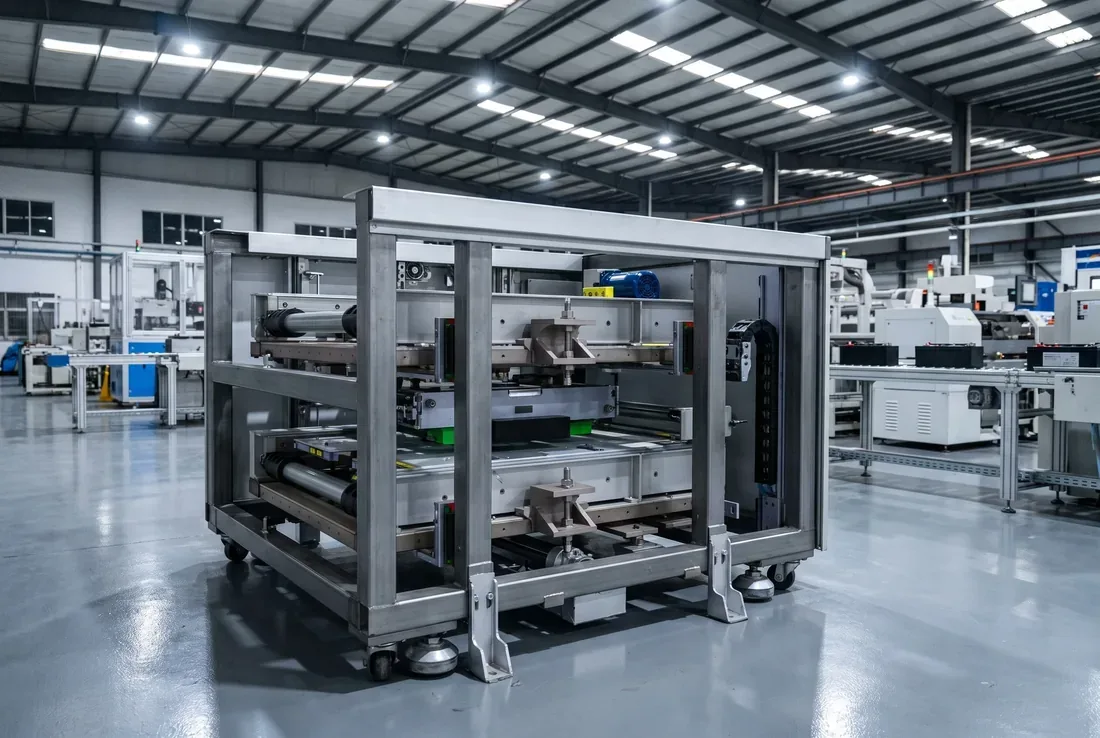
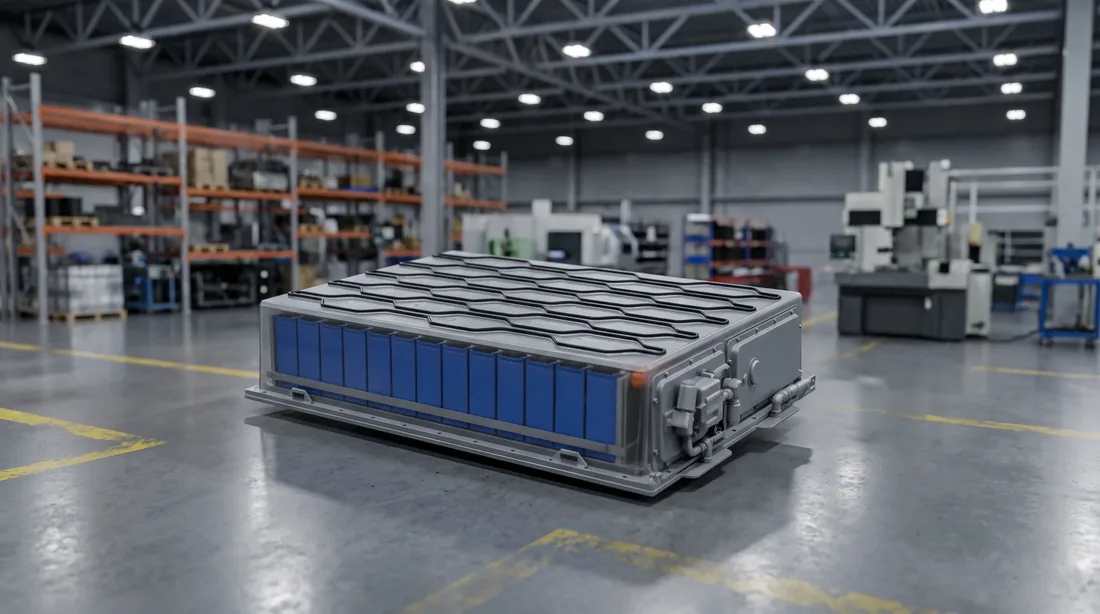
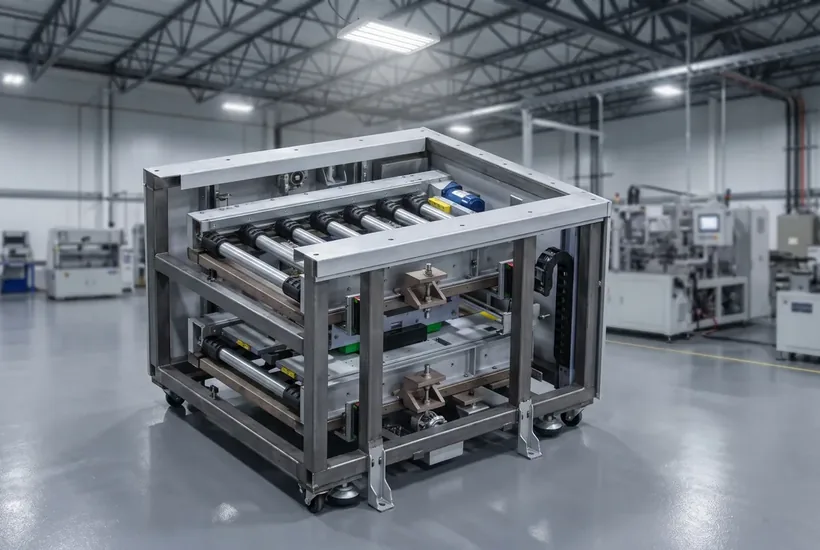
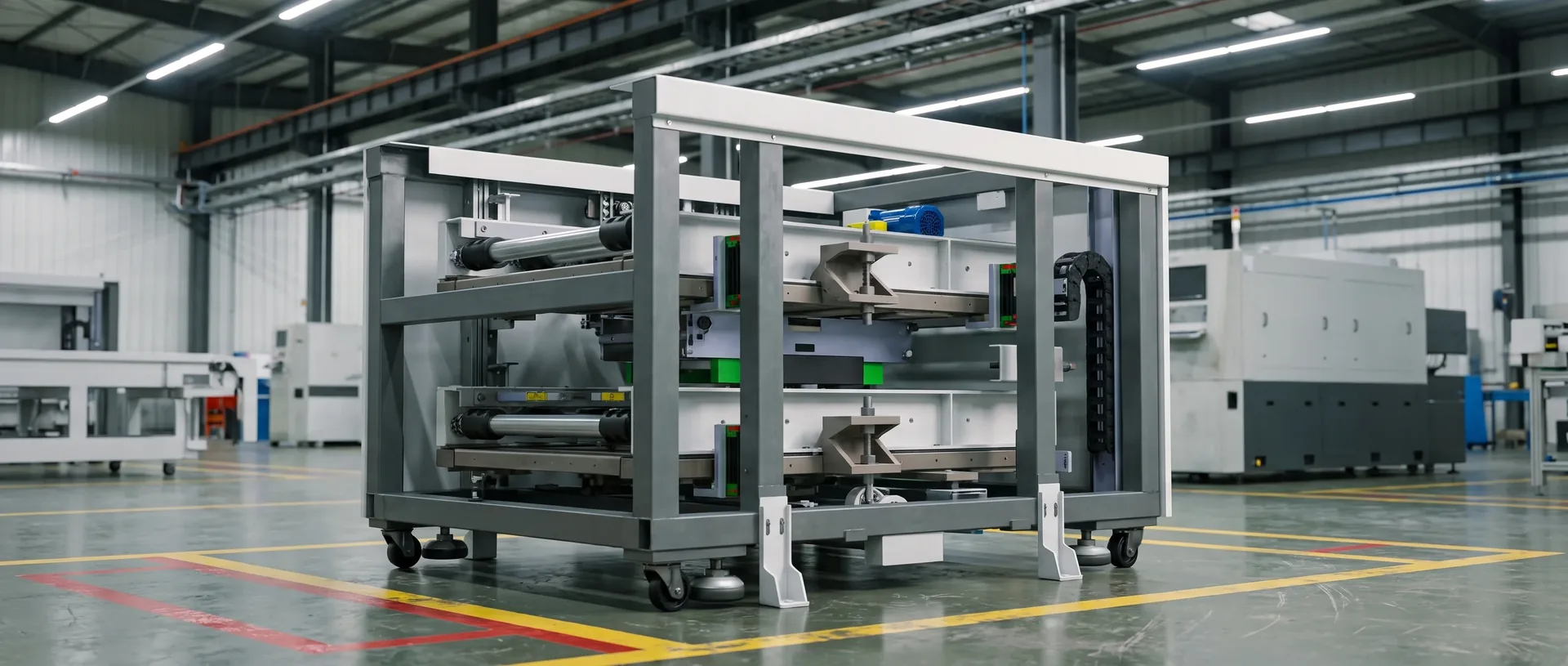
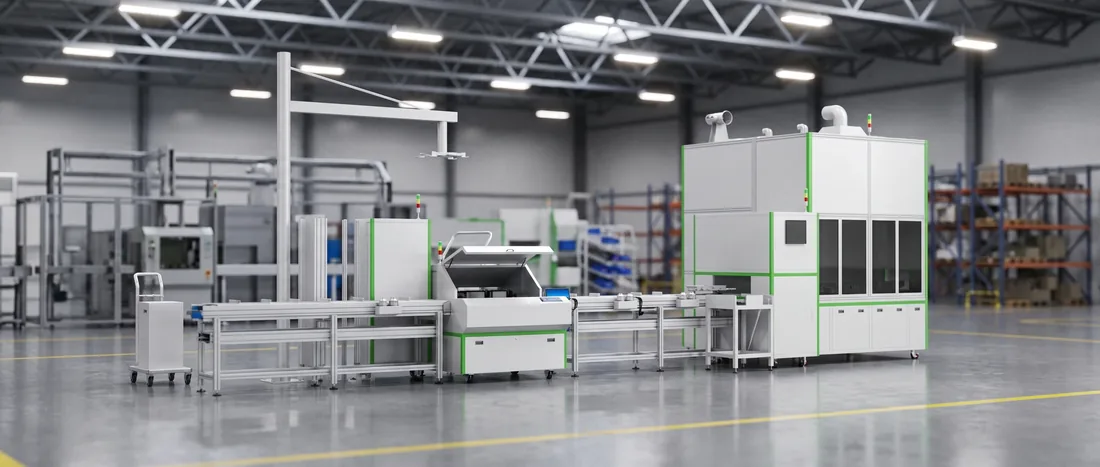
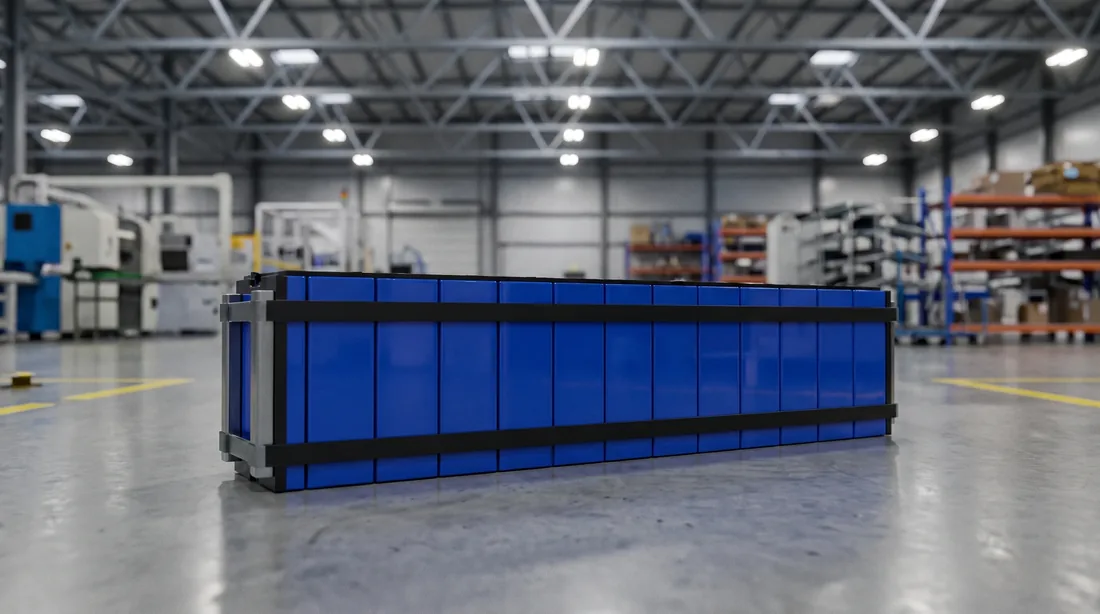
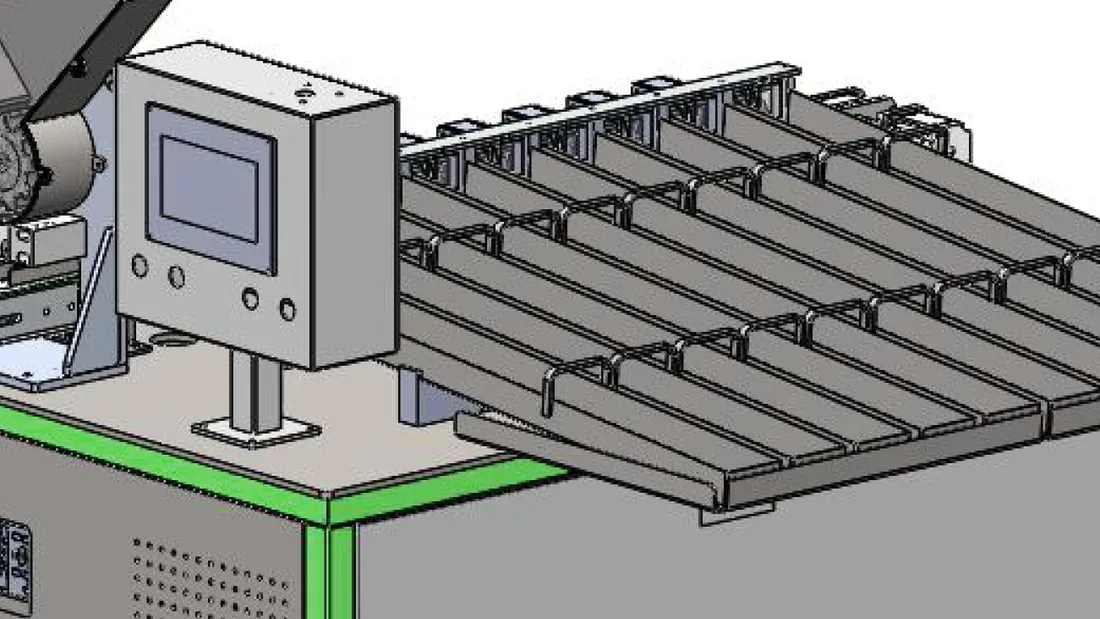
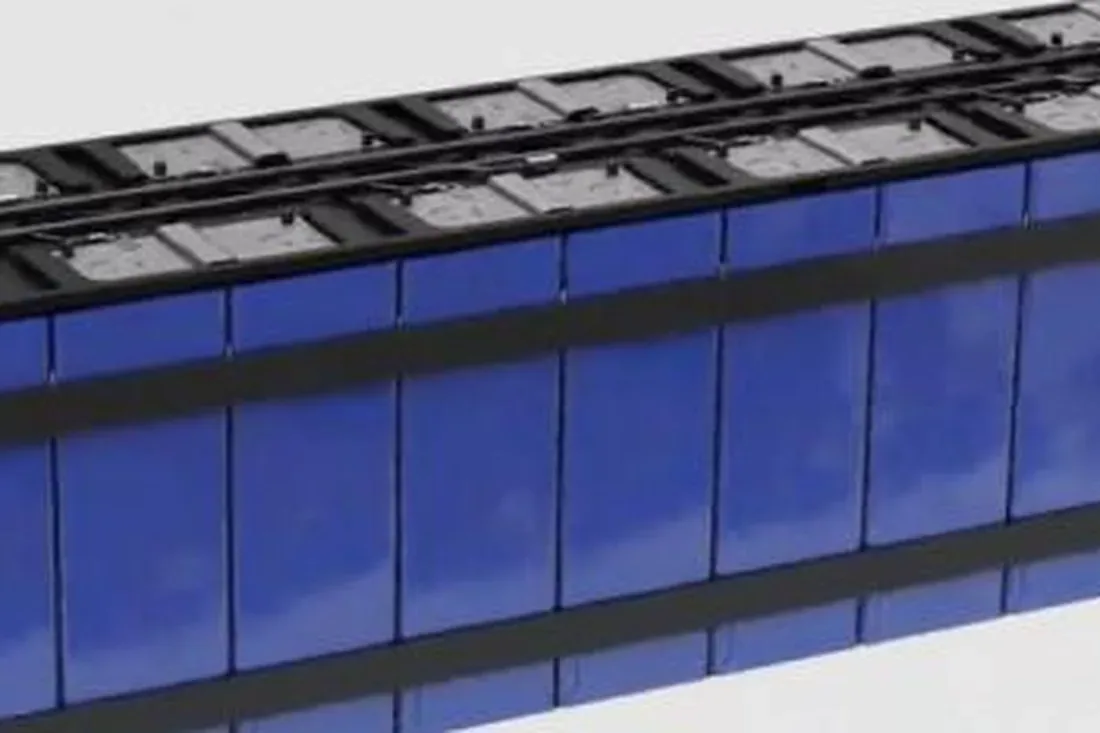
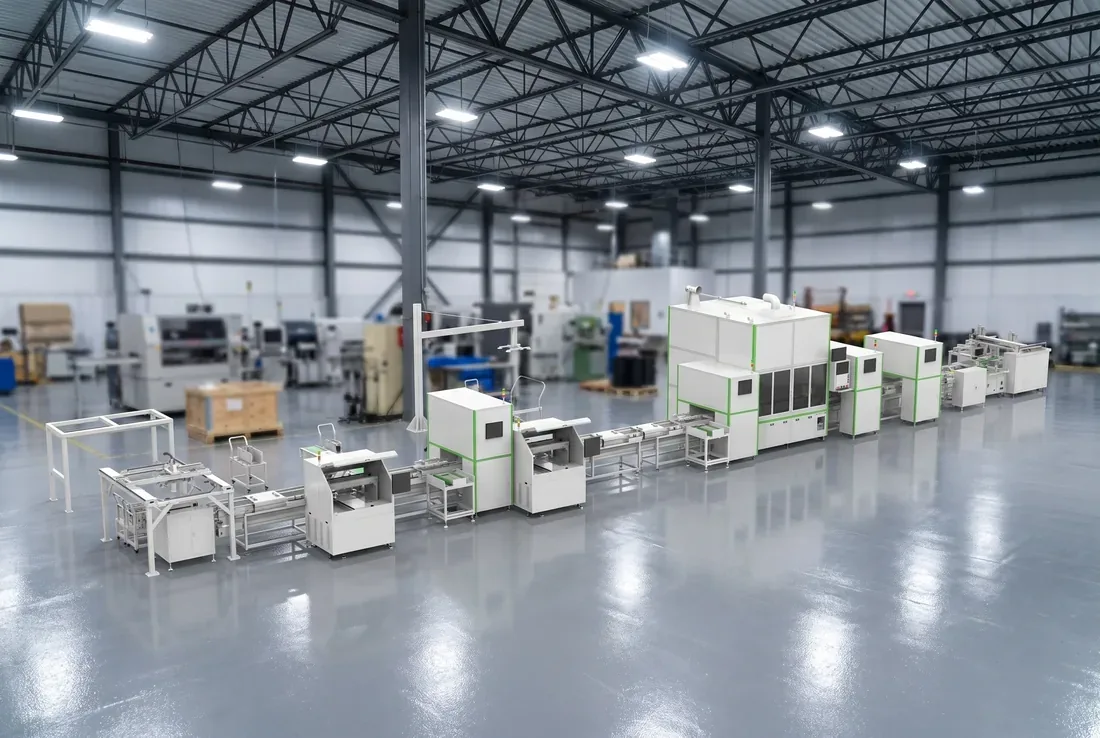
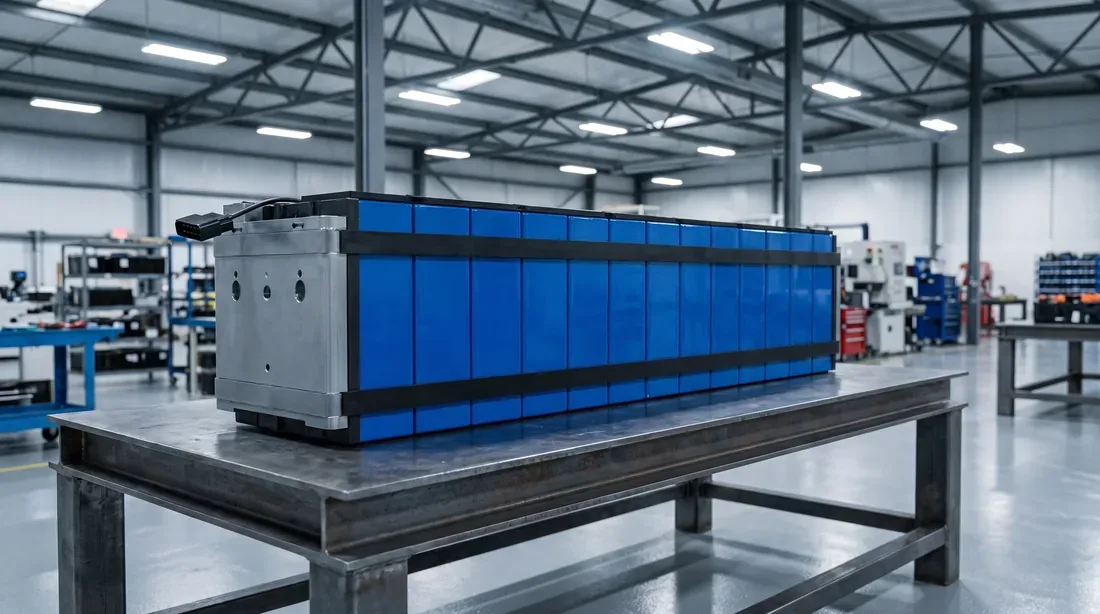
Three views of the same object: body, table, beam. No caption is attached to each — they are here because the machine is what this section is about, not because every image needs a sentence.
Nine machines in the catalogue, and one of them has no neighbours
Every other machine we build is described by what stands upstream and downstream of it. This one has neither, and that absence is the whole specification of how you will use it.
- A station inherits a part — it arrives on a carrier, located, at a known moment
- This machine is brought a part — somebody puts it on the table and clamps it
- A station inherits a datum — the carrier holds it and the line maintains it
- This machine gets its datum from a fixture that was cut for one job
That is the entire difference, and everything else on this page follows from it. An in-line welding station is quoted with a carrier, a takt budget and a position in a sequence of seventeen. This machine is quoted with a table, a fixture and a door. Neither is better. They answer different questions, and the expensive mistake is buying one while describing the other.
The seventeen stations of the module segment, and what each one hands to the next, are set out on the module assembly line page. Not restated here.
Take this to any supplier
"Does the part come to the machine, or does the machine stand where the part already is?"
Three jobs a line cannot absorb, whatever its takt
These are not exotic. They are the ordinary work that appears the week after a line starts running, and a line has nowhere to put any of them.
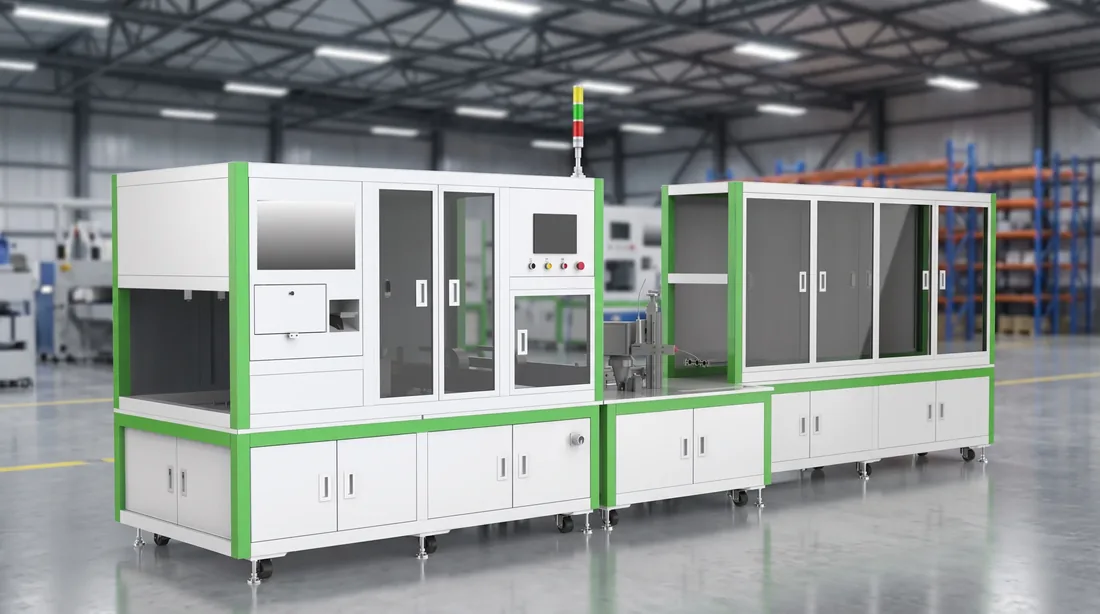
First articles and process trials
Repair and rework
Low volume and off-catalogue parts
"Every one of these three is work you will certainly have. None of them is work a takt can hold."
⚠️ We are not claiming these are the only uses. They are the three that come up in almost every project, and they are enough to decide whether a stand-alone machine belongs in your quotation at all.
A line is a promise about when. A table is a promise about what. This machine only ever made the second one.
This page borrows four arguments from four other pages and repeats none of them. Every link above goes to the page that owns one.
Send the joint, and we will tell you which pair
Materials and thicknesses, a photograph or drawing of the joint, the largest part you expect to put on the table, and a rough weekly quantity. Four inputs, and the answer is specific.