Cell compatibility / Changeover, tooling and what it depends on
A Range Says The Machine Can Take Your Cell. It Does Not Say Your Line Runs It Tomorrow.
Compatibility is answered with a table. Changeover is answered with a day of your plant standing still. Most quotations answer the first question and let you find the second one after the money has moved.
⚠️ There is no figure on this page for how long a changeover takes. That is not an omission — section 06 is about why a duration quoted against somebody else's part is worse than no duration at all.
The question this page exists to answer
"We run one cell today and we will run a bigger one in about two years. Does that make this line a two-year purchase?"
— the question behind almost every compatibility enquiry we receive, asked in a dozen different ways. It is a fair question, and the honest answer has three parts rather than one.
- ToolingWhat a changeover replaces
- Quoted separatelyHow tooling is priced
- Within rangeWhere compatibility applies
- 587 AhOn the roadmap, not today
The day itself, in the order it actually happens
Five things happen, always in this order, and each one waits for the one before it. No step here has a duration attached — what each one waits for is stated instead.
- Step 01
The line empties
Work in progress leaves the line before anything is unbolted. What it waits for: how much is on the line when you stop — a scheduling decision, not an equipment one. - Step 02
Tooling comes off, station by station
Not one changeover — a set of them, one per station that touches the part. What it waits for: how many stations carry part-specific tooling on your configuration. → section 05 - Step 03
Datums are re-established
Every station that positions the part now positions a different part. What it waits for: whether the new fixture uses the same datum scheme as the old one — a decision made months earlier. → section 07 - Step 04
First articles
Parts are made and checked against criteria before anything is called production. What it waits for: whether criteria for the new cell already exist, or have to be written now. → the acceptance document - Step 05
Production resumes
At the same takt as before, because takt is a property of the line, not of the cell. What it waits for: nothing further — if steps 01 to 04 were done in order.
⚠️ Read step 02 twice. The most common misreading of a compatibility range is that a changeover is one event at one machine. It is a set of events, and the count is a property of your line, not of your cell. Everything expensive about changeover day follows from that count.

The part that changes is the part nobody quotes
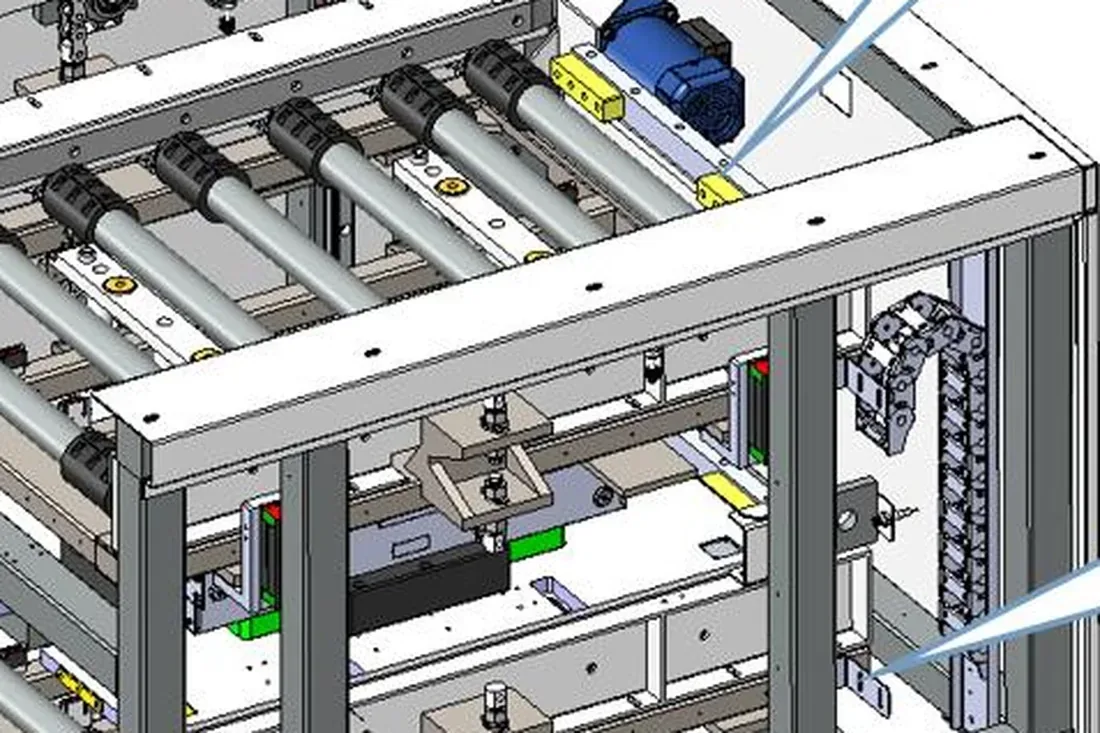
A fixture is the piece of the machine cut to the shape of your part. It is why a machine can be general and a line can still be specific.
- A machine is general — axes, drives, sources, controls; none of them knows your cell
- A fixture is specific — it was cut against one envelope and one datum scheme
- A program is specific too — positions, order, and what counts as present
- A range is neither — it is the set of parts a fixture could be cut for
This is the whole reason the two sentences in the headline are different sentences. A compatibility range describes what fixtures can be made for; it does not describe the fixtures you own. When a supplier answers "yes, compatible" and stops there, they have answered a question about their machine and left the question about your plant standing. The rest of this page is that second question.
The compatibility ranges themselves — cell, module and pack — are published in one place, on the energy-storage pack line page. They are not restated here, because this page is about the day, not the envelope.
Take this to any supplier
"Which of your stations carry part-specific tooling on my configuration, and how many of them?"
Three sentences that sound identical, and cost three different amounts
Buyers are rarely misled here on purpose. These three claims are genuinely hard to tell apart in a quotation, and only the third one is free.
"It is compatible"
"It runs both"
"It runs both with no changeover"
None of the three is dishonest by itself. What makes them expensive is that they are usually written in the same tone, in the same place on the page, by suppliers who are answering three different questions — and only one of those questions is the one you asked.
Not every station on the line notices that the cell changed
The count in step 02 comes from this distinction, and it is the most useful thing to establish before you compare two quotations for the same changeover.
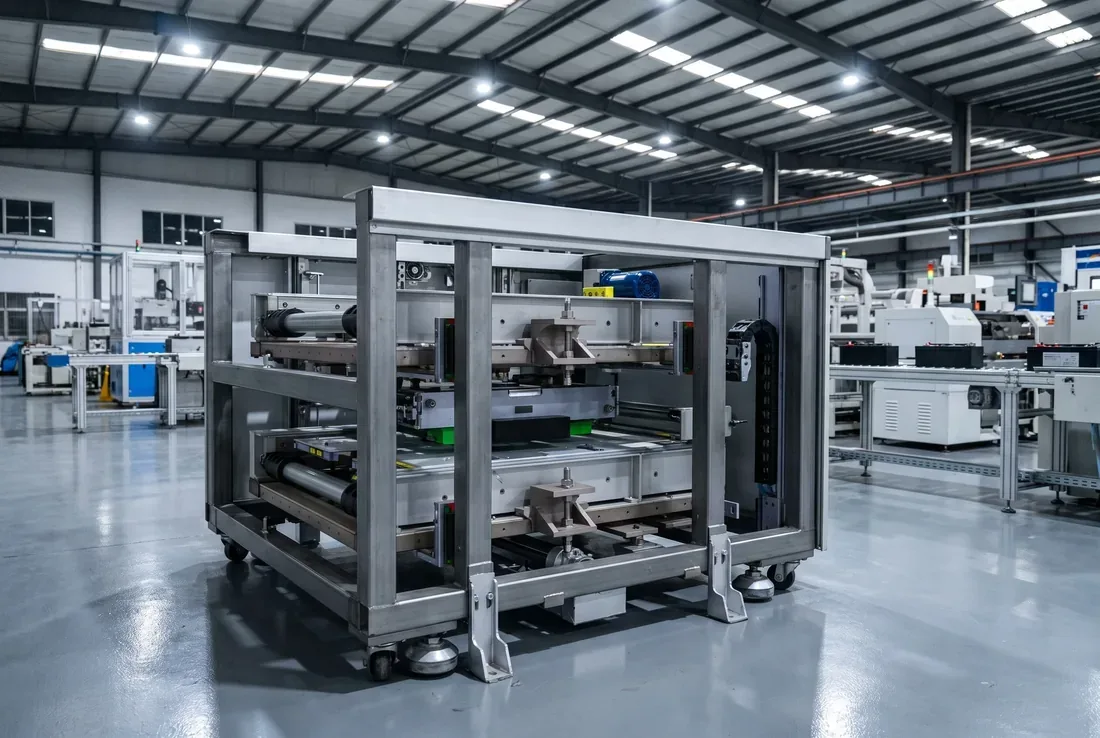
Stations that hold the part
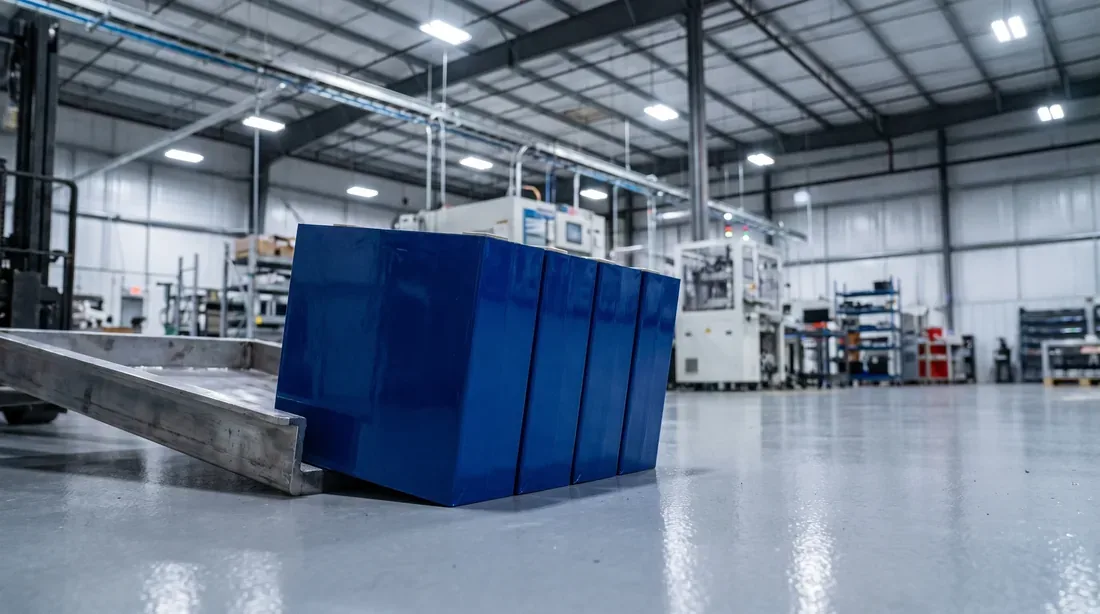
Stations that move the part
Stations that only read
The three groups are not equally expensive and not equally quick. Any supplier can tell you which of their stations sit in which group — and the answer being vague is itself an answer. The station-by-station list for our own lines is on the module assembly line page.
Four things decide how long it takes, and none is a constant
This is the question every buyer actually has, and the one this page refuses to answer with a number. What follows is why, and what to ask instead.
A changeover duration is not a property of a machine. It is a property of your configuration, your two parts and your fixture strategy — three things that do not exist until there are drawings. We could print a figure today. It would have been measured on somebody else's line, with somebody else's station count, and you would schedule your plant against it. A wrong number here is worse than no number, because it gets planned around.
01 — How many stations carry tooling
02 — Whether the second fixture exists yet
03 — Whether the datum scheme survives
04 — Whether the criteria already exist
⚠️ We do not publish delivery or warranty terms anywhere on this site until they are confirmed, and a changeover duration falls in the same category: not withheld to be coy, withheld because a published figure has to be one we can be held to.
Three decisions taken now that shorten a day two years away
All three are free at the design stage and expensive afterwards, which is the only reason this section sits this early on the page.
Name the second cell now, even loosely
Ask for a shared datum scheme
Have the second tooling quoted with the first
⚠️ None of these three is a product we sell. They are decisions you make with whoever builds your line — including if that is not us.
The second one is a different job from the first
Almost everything written about changeover describes the first one. The first is where the cost sits; the ones after it are where the assumption gets made.
The first time
Every time after
Which is why the useful question to a supplier is not "how long is a changeover" but "how long is the second one, and what did the first one leave behind that makes it shorter?" A supplier who cannot separate those two has quoted you one number for two different jobs.
Large-format cells are on the roadmap, and that is the word
This is where a page like this usually gets vague, so the sentence is put plainly instead: it is a direction we are working toward, not a capability today.
- ✅ On the roadmap — 587 Ah large-format cells are what we are working toward
- Not a published capability — do not plan a line around it on the strength of this page
- Ask directly — if your programme needs it, that is a conversation with dates, not a web page
The alternative to this paragraph would have been to put the figure into a compatibility table and let you assume. We would rather lose the enquiry than have you find out during a project. The published ranges cover what is proven today and they live on the energy-storage pack line page. Anything beyond them, including this, is a conversation before it is a specification.
⚠️ This is the same discipline applied everywhere on this site: delivery time, warranty, and weld criteria for the off-line gantry machine are all blank for the same reason. Blank is a position, not an oversight.
Tooling is quoted separately, and that is deliberate
It would be easy to fold it into the line price and easier to sell. Here is what separating it buys you, and what it costs us to do it this way.
You can see what a second part costs
You can buy it later
What it costs us
Within the published compatibility ranges, changing the product means changing tooling, and changed tooling is quoted as its own item. That single sentence is the whole commercial position, and it is the same sentence whether you are changing cells next quarter or in three years.
Two drawings and one sentence, and the answer gets specific
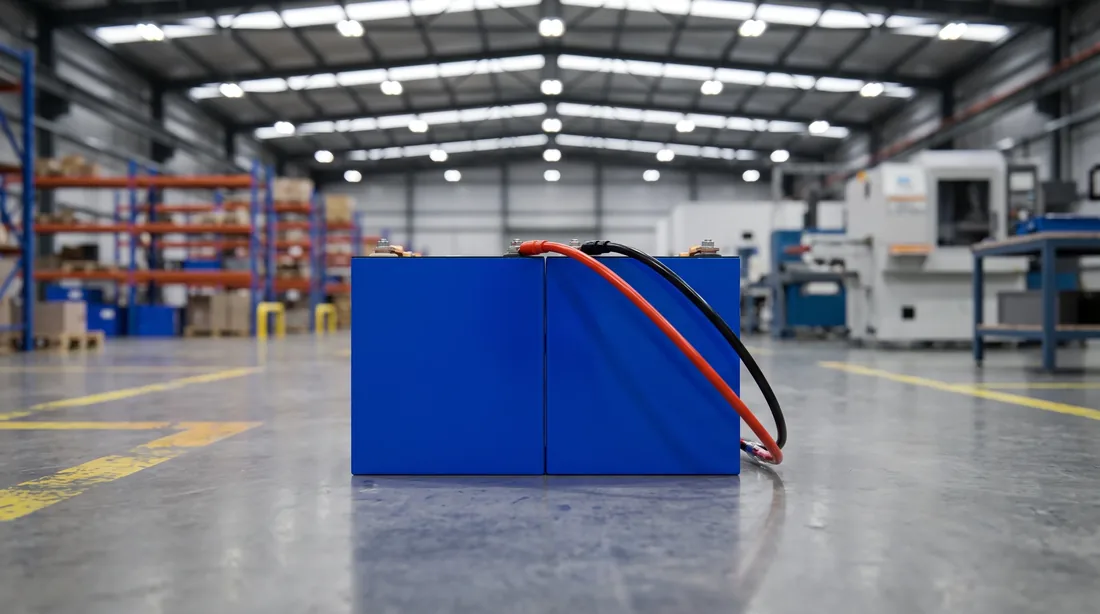
Everything on this page turns into a real answer once these exist. Two part numbers are not enough — a part number describes a cell, not how it presents to a station.
The cell you run now
The cell you expect to run
One sentence about when
What comes back: which stations on your configuration carry part-specific tooling, whether a shared datum scheme is possible across your two parts, and the second tooling set quoted as its own line item.
Ask three suppliers, and you will get these three answers
The columns are not good, better and best. They are three genuinely different things a supplier can mean by the word compatible, and they cost differently.
| What you asked | The range and the dayWhat we aim to give | The range onlyThe common answer | "No changeover needed"The one to probe |
|---|---|---|---|
| What is actually stated | Compatible within a range, and what changes on the day | Compatible within a range | Both parts run and nothing changes |
| Tooling | Named as a separate item, and quoted | Not mentioned | Implied not to exist |
| Who carries the risk | Shared, and written down | ⚠️ You — discovered later | ⚠️ You — discovered on the day |
| What to ask next | Which stations, and whether the datum is shared | Which stations carry part-specific tooling | Which stations that claim covers |
The third column is not necessarily false. It is unfinished — it can be entirely true for two parts that present identically to every station that touches them, and it is worth exactly as much as the list of stations behind it. The difference between a strong supplier and a weak one here is not the claim; it is whether the list exists.
Send both cells and we will map the changeover
The one you run and the one you expect to run, plus one sentence about when. What comes back is a station list, a datum answer and a tooling quotation.