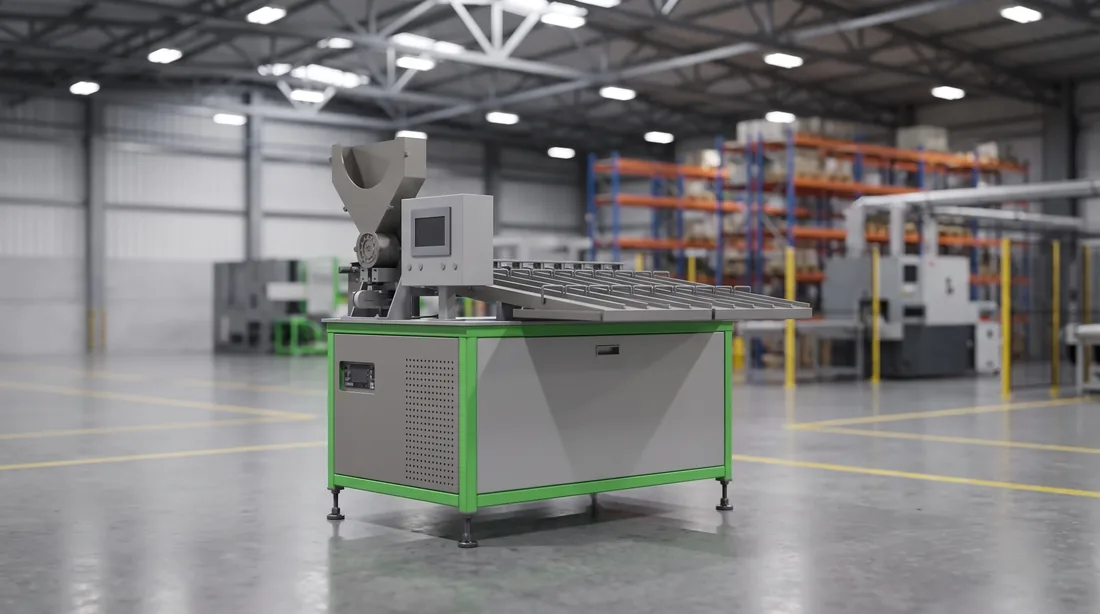
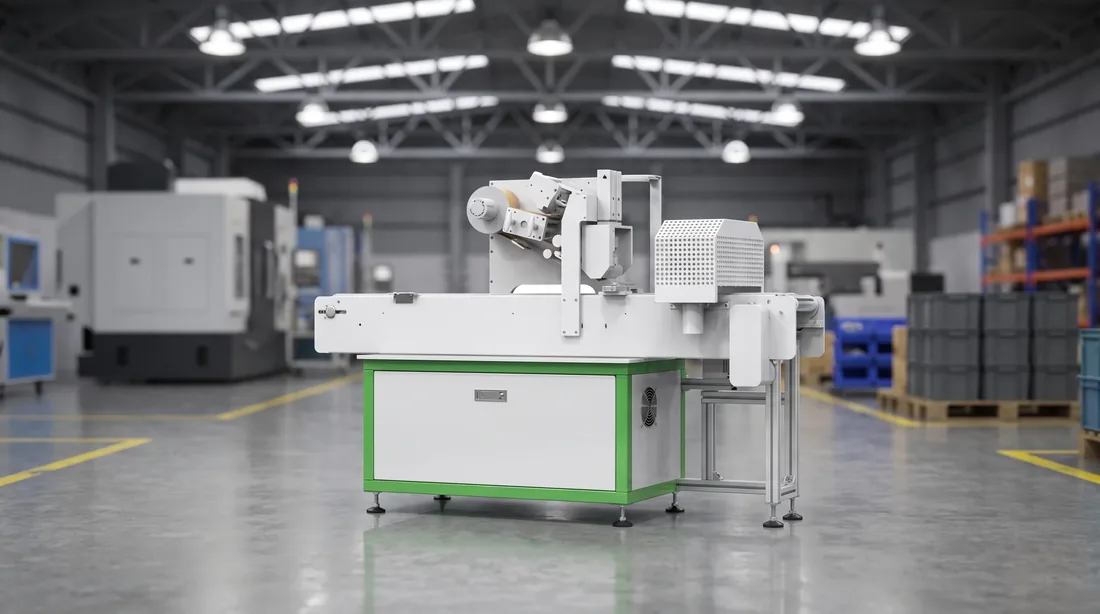
Module stacking and pressing / BLP-SP — the station that turns a stack into a dimension
0–8000 N Is What This Machine Can Apply —
the Number Inside It Is Yours
Every pressing station publishes a maximum. The figure that decides your module is the one chosen inside the range, and it comes from your cell and your end plates rather than from our datasheet.
⚠️ Both figures describe the machine. Neither is a recommendation for your module — which force your stack is pressed at is section 03, and what the pressing length span is not is section 06.
Two figures, and what each one is
- 0–8000 N — a ceiling, not a setting
- 300–1100 mm — tooling, not a module length
- Real time — measured while it is applied
- 0–8000 NServo pressing force, sensor-monitored
- 300–1100 mmPressing length the tooling accepts
- Real timeForce is measured while it is applied
The station's output is a dimension, and force is only how it gets there
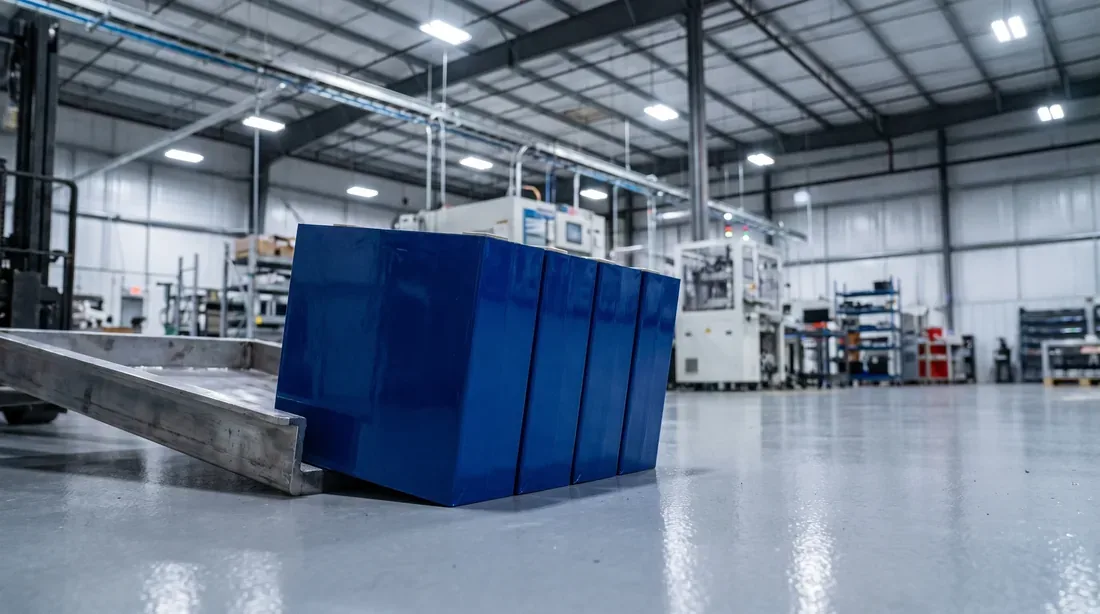
It is easy to buy this machine on its force figure. What every station after it consumes is not force at all — it is a block of known length that stopped moving.
A stack of cells is a sum, and sums have spread
Force is the instrument, not the product
Which station number this is
The two halves of the station's name describe two different kinds of problem. Stacking is arithmetic — the right parts in the right order. Pressing is physics — a force applied to a sum until it becomes a dimension. The arithmetic half is section 12; the physics half is everything between here and section 09.
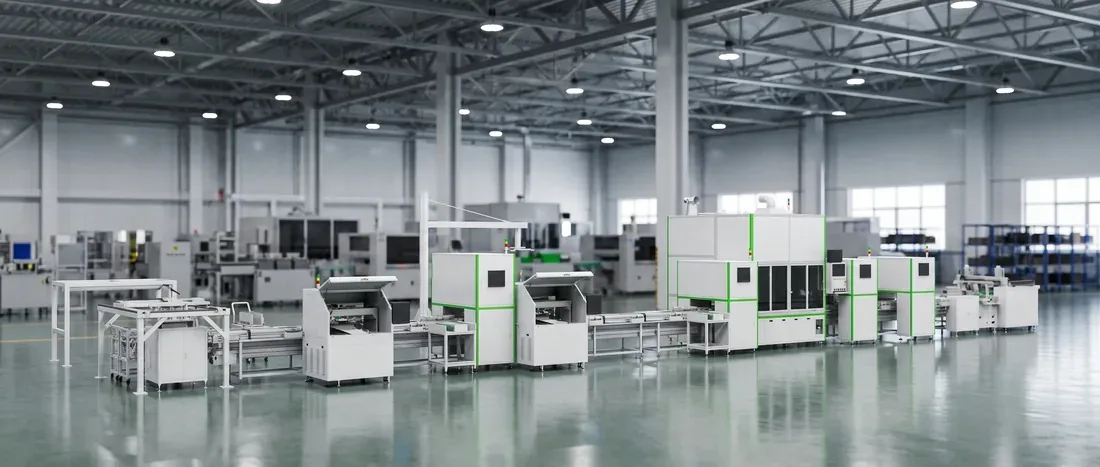
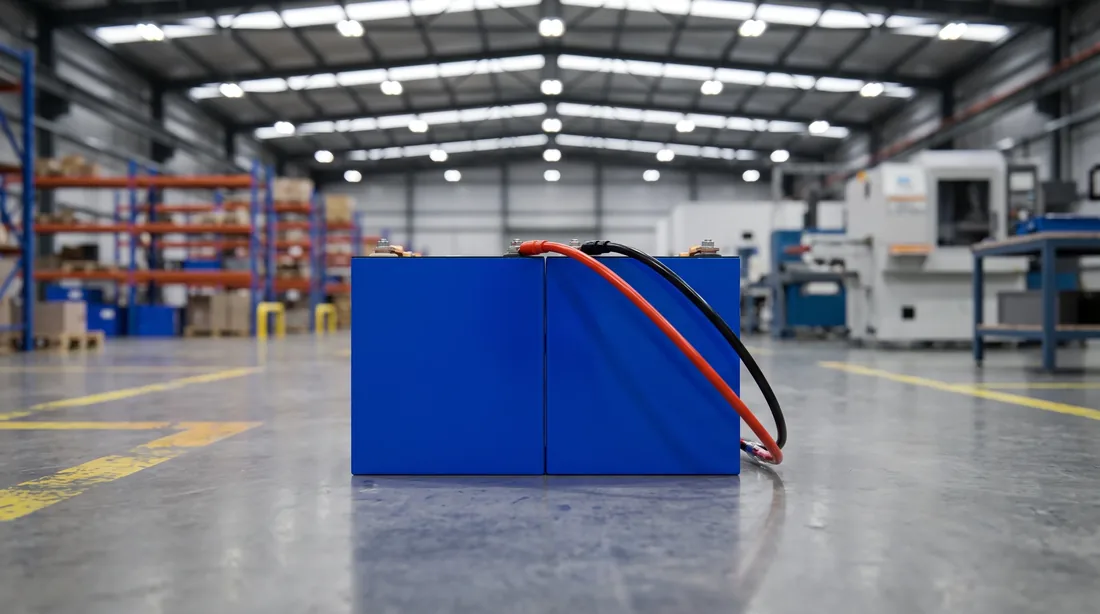
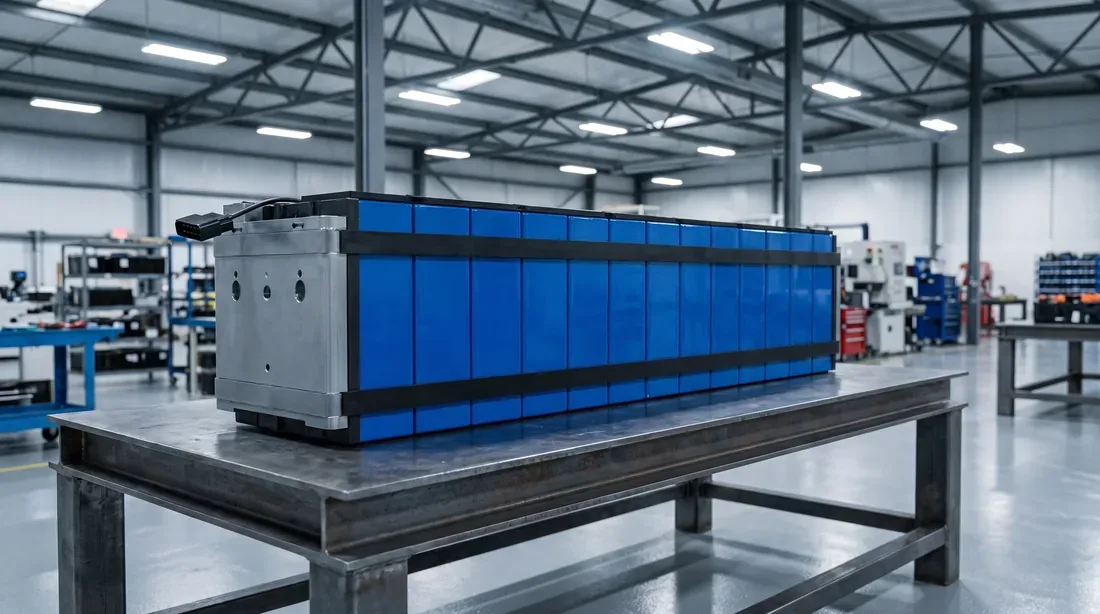
Who chooses the number inside 0–8000 N, and from what
⚠️ Published here for the first time on this site. The range is ours. The value inside it is decided by three properties, and all three of them live on your side of the drawing.
How your cell behaves under load
What it decides about the force
Who holds it
What the module has to survive
What it decides about the force
Who holds it
How stiff your end plates are
What it decides about the force
Who holds it
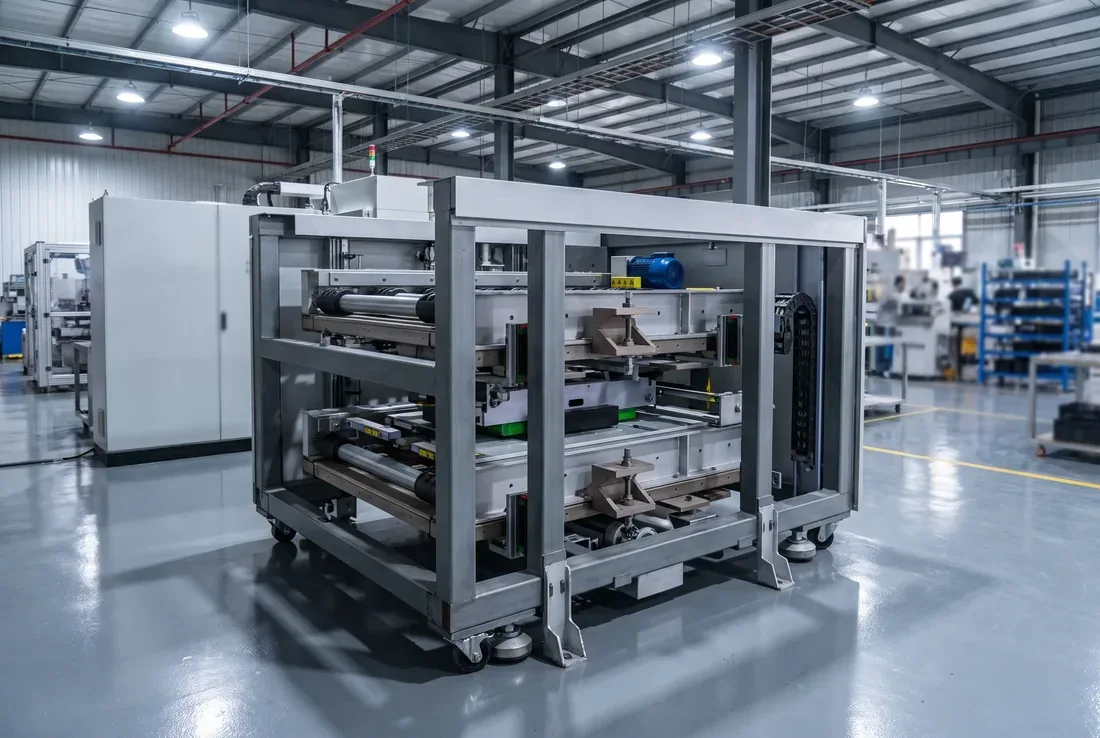
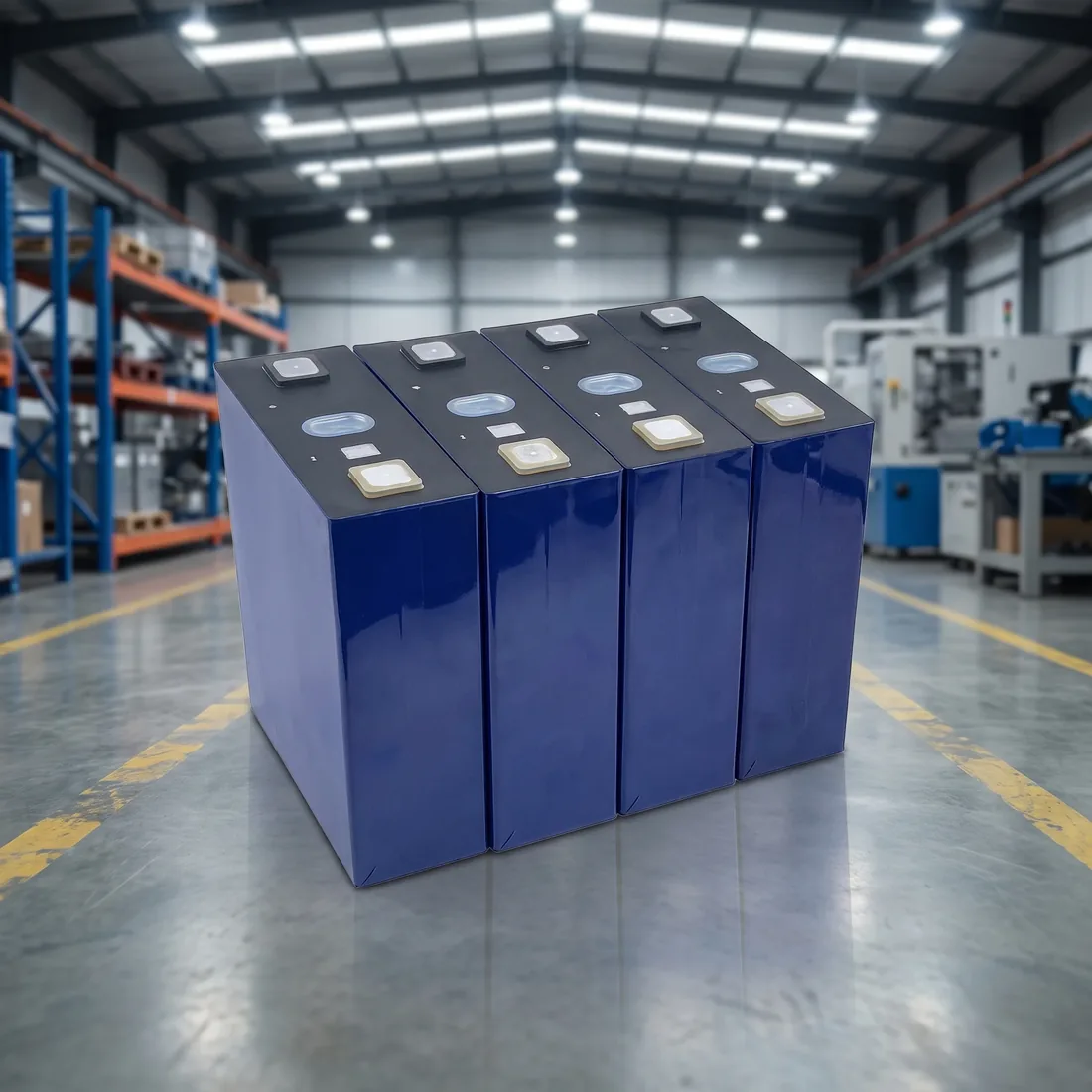
A press is an event. A dimension is a duration. This machine owns the event, completely — and the rest of this page is about who owns the duration.
The event
The duration
Two different owners
Pressed to size is an event. Held at size is a duration.
The two sound like one sentence in a specification and they are not. Only the first is this machine's, and knowing where the handover falls changes what you should be asking for.
Force applied, measured, released — then the length the enclosure was drawn for, months later.
The station's name contains a verb that finishes, and the buyer needs one that does not.
A compressed stack pushes back, and it always has.
A record of the application, not of the retention.
The end plates and the banding own it, not the press.
Ask whether you can have the pressing record, not what the maximum force is.
The argument about who performs each half of this position, and why calling the whole thing automated overstates it, belongs to the module segment page and is not repeated here.
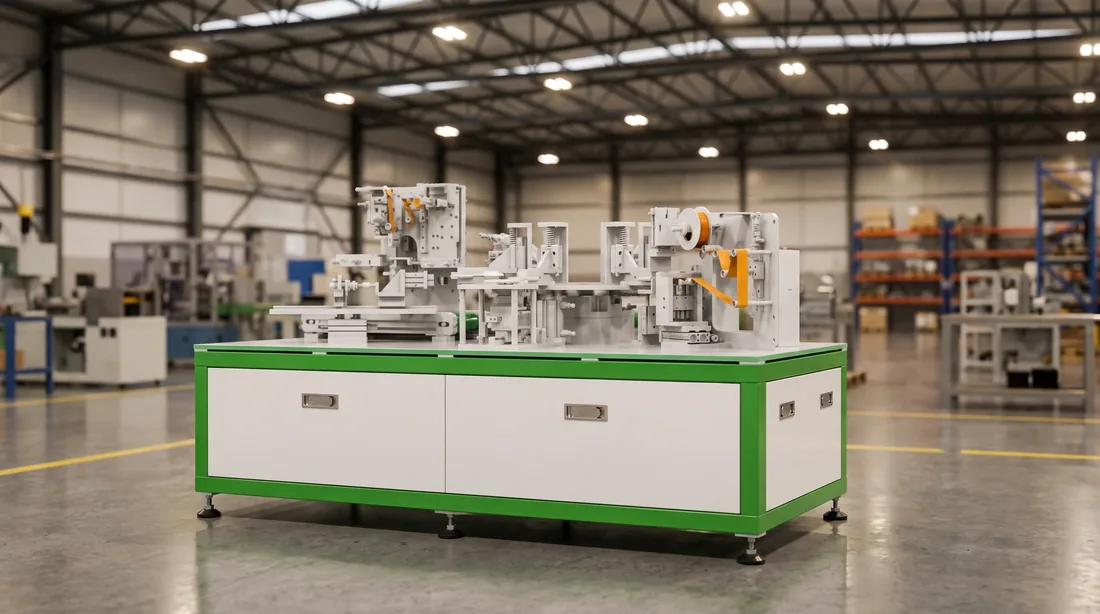
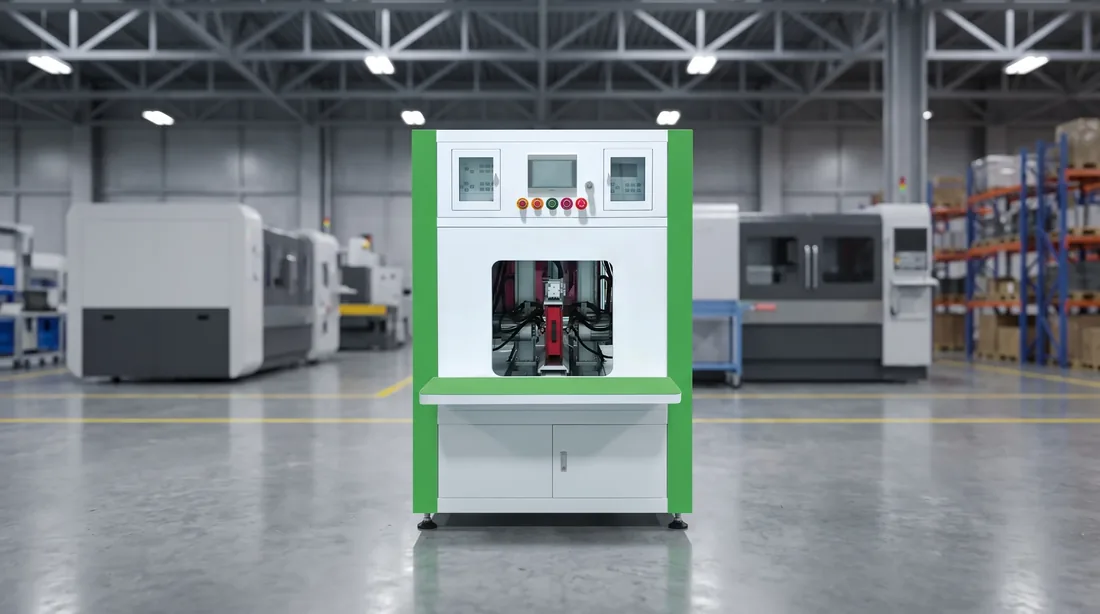
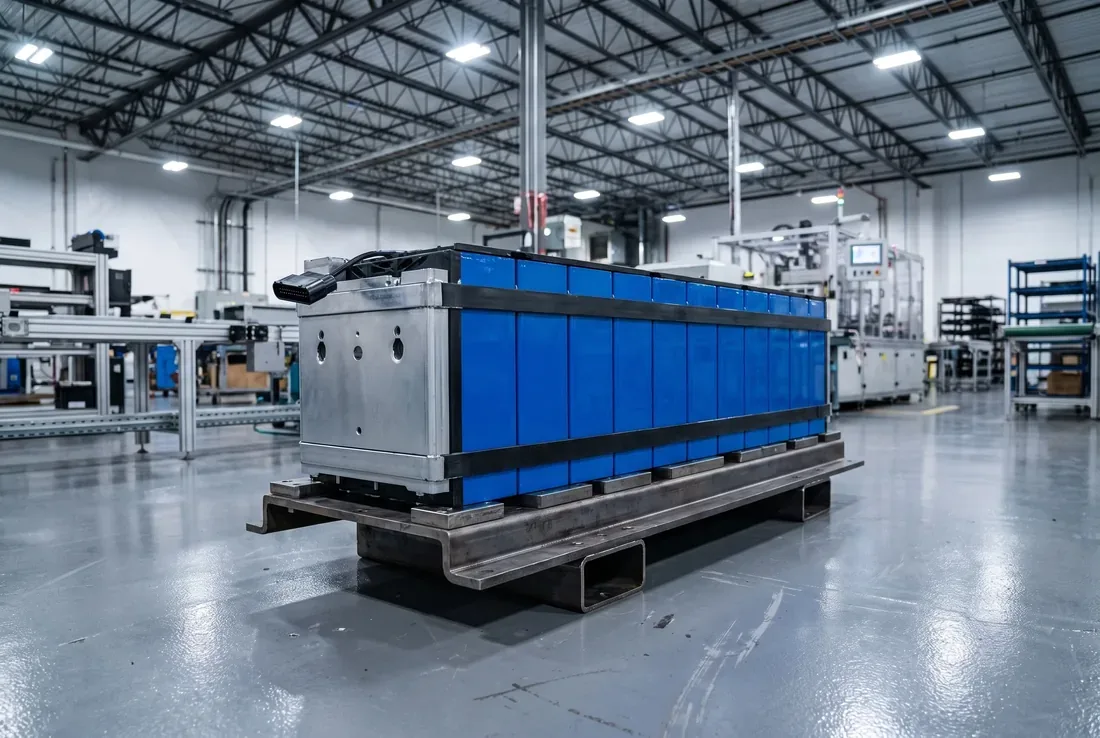
300–1100 mm describes the tooling, and it is not a module length
⚠️ This is the figure on this page most likely to be misread, and the misreading is always in the same direction — as a statement about how long a module we can build. It is not one.
What the span is a statement about
What it is not a statement about
Why we separate them rather than quote the friendlier one
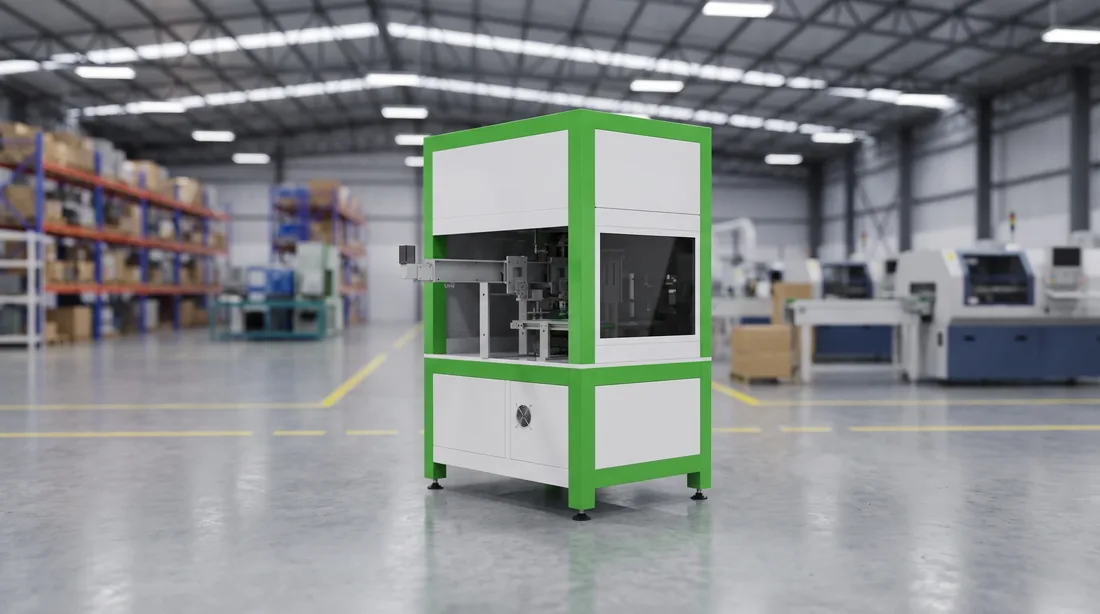
A range that starts at zero is a set-point, not a fixture
The way the force figure is written tells you something the figure itself does not: what has to change when the module running on this station changes.
Read the notation
What that means with two products
What it does not mean
What we need to set it
This is the honest reading of one small piece of notation, and it is worth a section because it is the difference between a station you can grow into and a station you have to replace. If you expect a second module type within the life of the line, the question to put to any supplier is which parts of their pressing position are commanded and which are built in.
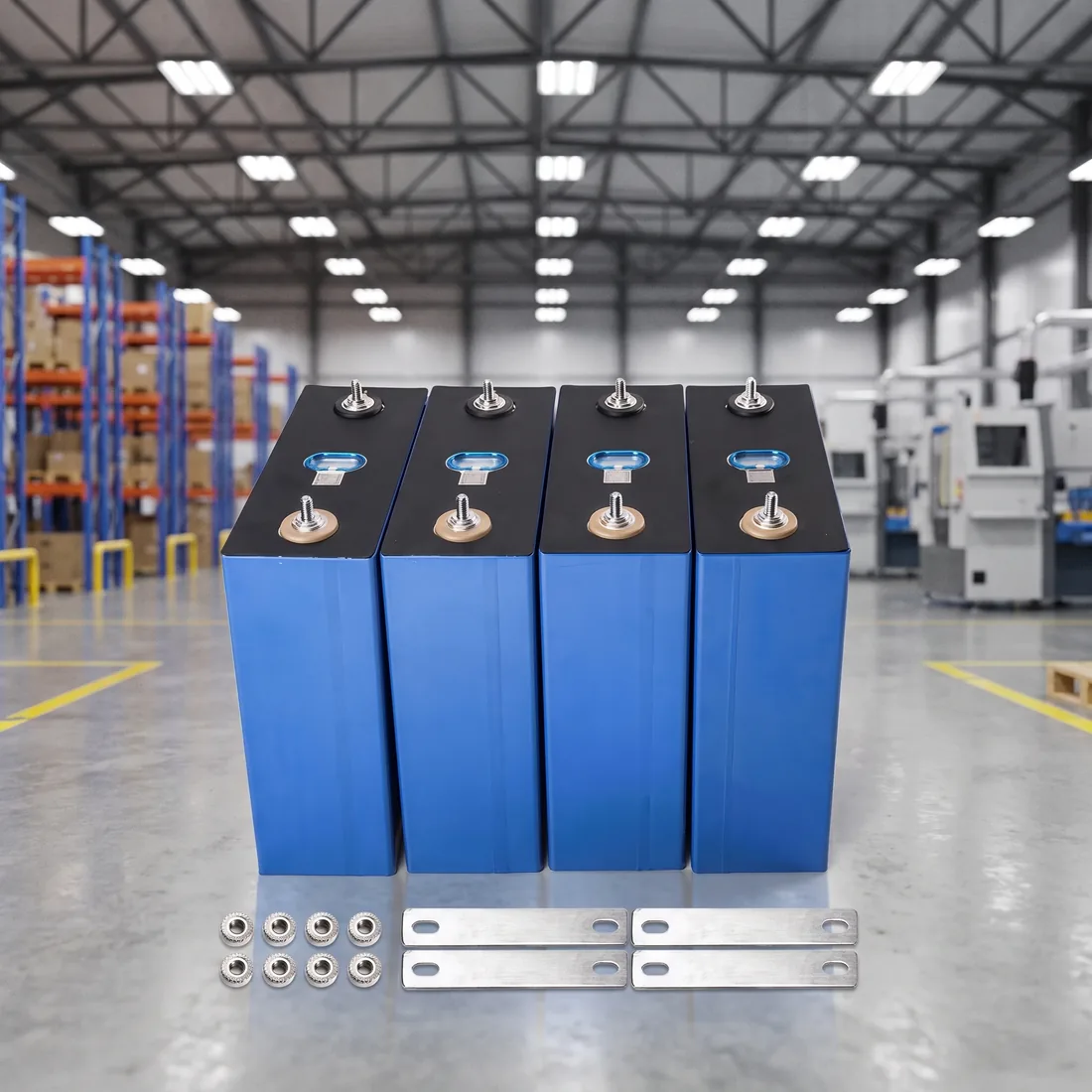
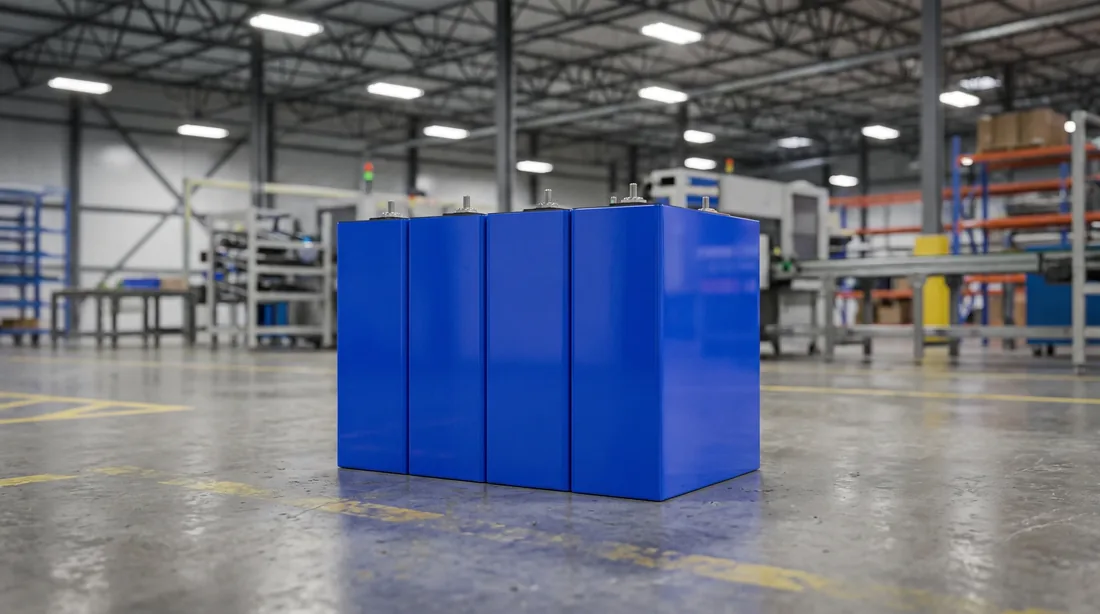
Send the cell and the end plate drawing. We will send back what this station does with both.
Your cell, your end plate and banding design, and the module length. If the pressing force is the thing you have not decided yet, say so — section 03 is the answer to that, and it is a normal place to be.
Reply within 24 hours / If your module length is near the edge of your tier's envelope, we will say which figure binds before quoting
The press is measured while it presses — what that is worth to you
Real-time monitoring is a machine property and it is in the specification. What happens to the measurement afterwards is a project agreement, and we would rather draw that line than blur it.
What the machine does
What that makes possible
What has to be agreed rather than assumed
There is a version of this section that would read better and be worse: one that promises an upload path and a file format. We can state what the machine measures, because that is ours. What happens to the measurement crosses into your network, and that is a conversation rather than a claim. If any of it needs to be contractual for you, say so in the enquiry — it is much easier to scope before the line is designed than to add afterwards.
Four figures this page leaves blank, and a different reason for each
These four come up in nearly every enquiry about a pressing station. ⚠️ Not one of them is missing for the same reason as the others, which is why they are listed rather than summarised.
Springback after release
Why it is not here
Where the answer actually comes from
Long-term retention force
Why it is not here
Where the answer actually comes from
Tolerance on the commanded force
Why it is not here
Where the answer actually comes from
Cycle rate at this station
Why it is not here
Where the answer actually comes from
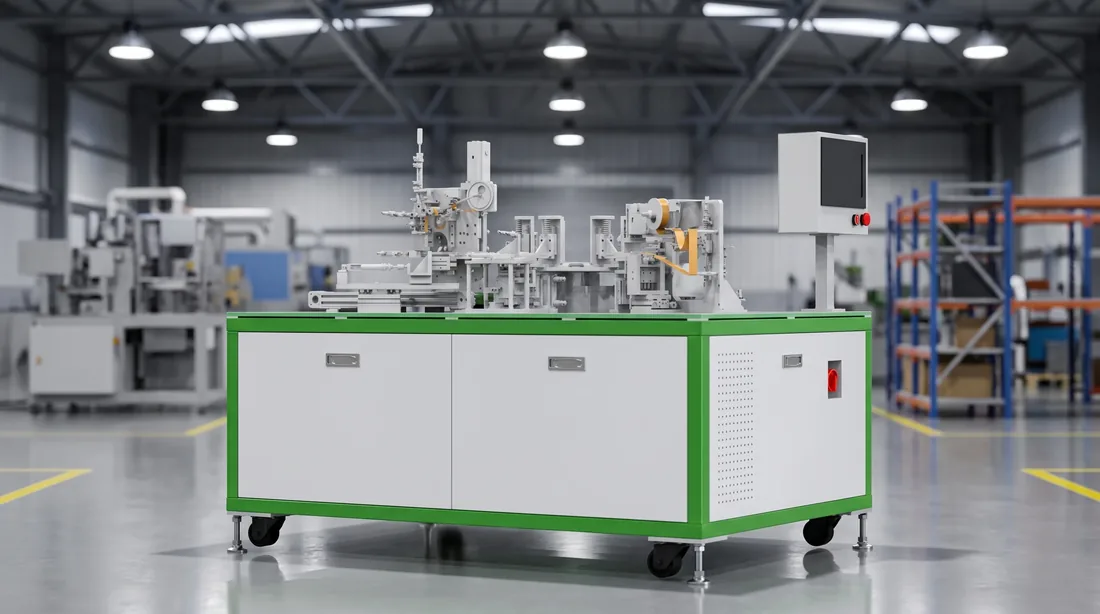
What the stations after this one are allowed to stop checking
The value of a pressing station is measured downstream of it. Four assumptions are made about every module that leaves here, and every one of them was paid for at this position.
It has one length, not a range of lengths
It will still have that length after this station
The force it received was measured, not assumed
It is a part now, not an assembly of parts
Every one of those four is an assumption, and assumptions are what make the downstream stations fast. A pressing station that gets any of them wrong does not produce an error at the pressing station — it produces one at a machine that was entitled to trust it, several positions later, on a part that is by then worth much more.
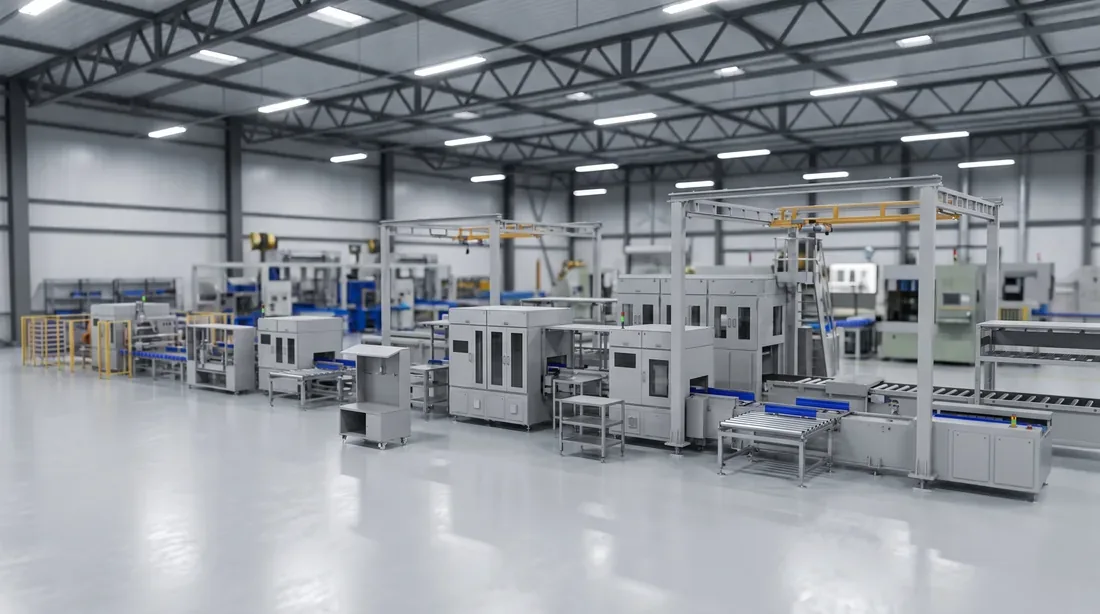
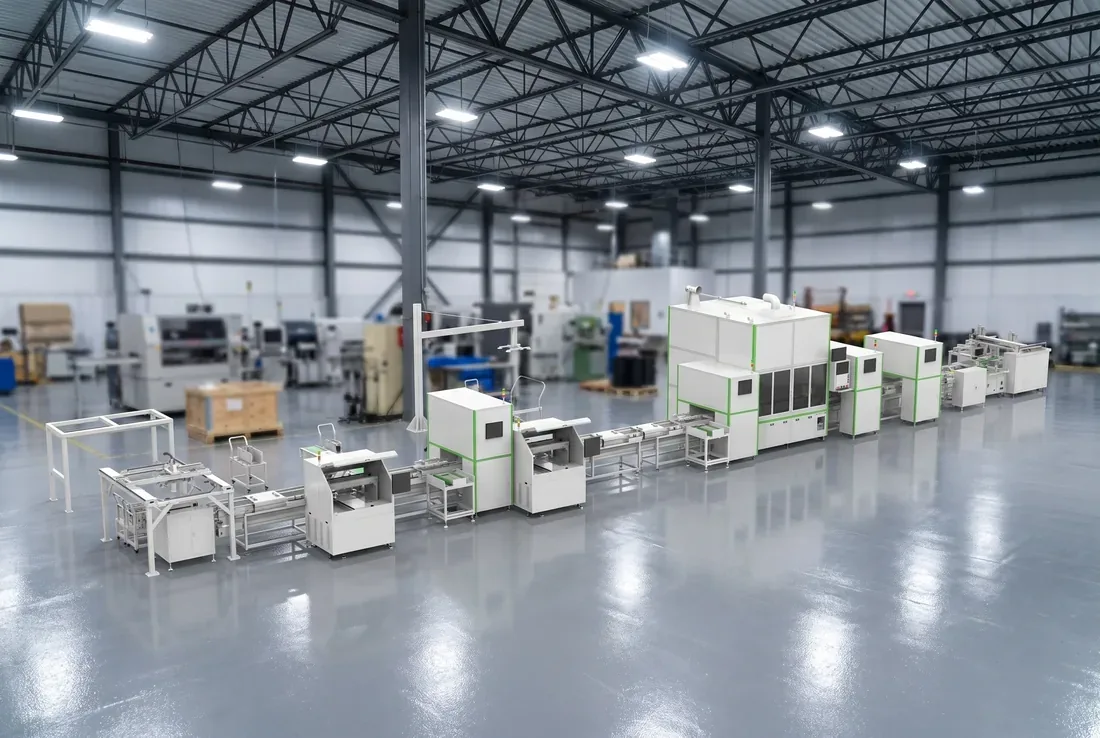
Before any force is applied, the stack has to already be right
The station's name has two halves and this page has spent nine sections on one of them. The other half is short, and it decides whether the force does anything useful at all.
The order is fixed before the press ever closes
A press cannot correct a stack that was assembled crooked
The press settles a sum, it does not reduce one
This is why the arithmetic half is worth its own section even though the physics half is what gets published. The force figure describes the best this station can do with a stack that was built correctly. Nothing in section 03 or section 07 applies to one that was not.
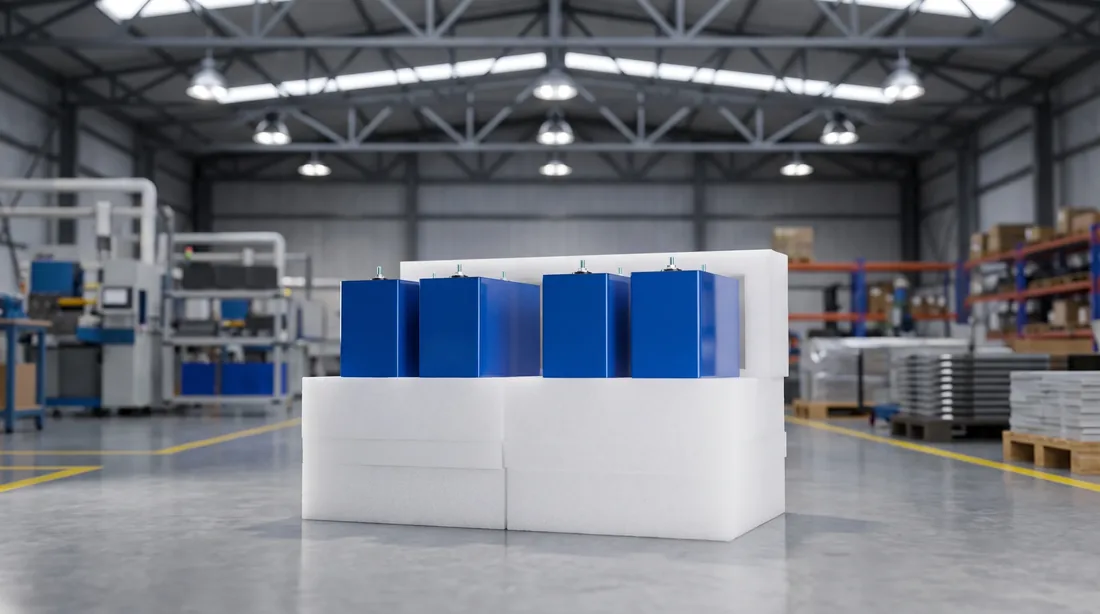
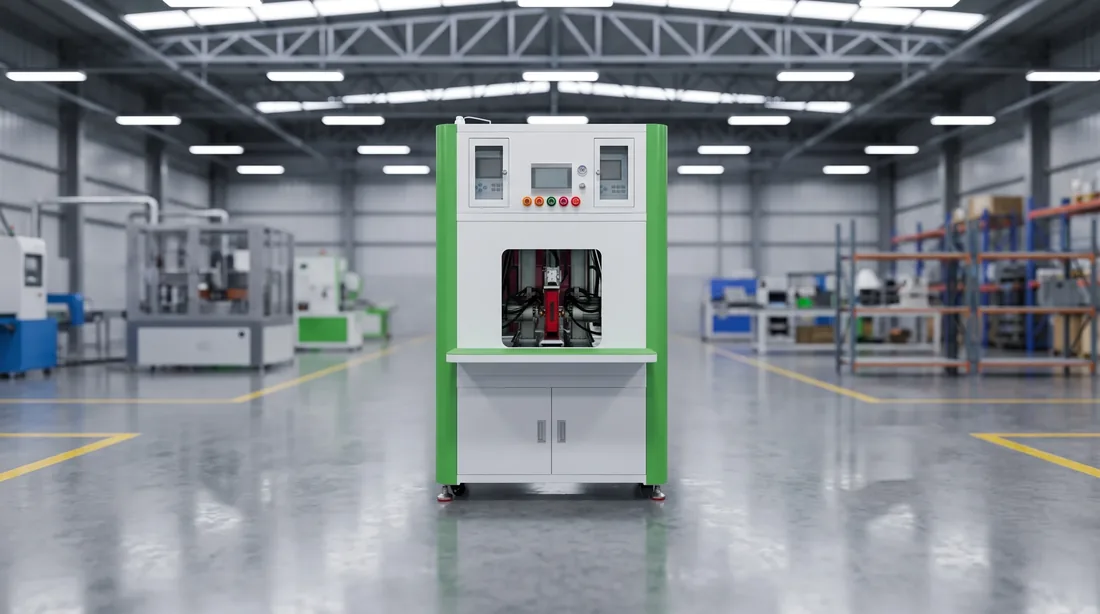
A different module length changes the fixture, not the station
Inside the published pressing span, a second module type is a tooling conversation. It is a real cost and a knowable one, and it is better priced early.
What stays
What changes
What is worth asking for now
The reason to raise this early is that the answer changes the fixture design, not the price of a spare part. A station specified around one module and asked about a second one later gets a different, worse answer than the same station specified around two from the beginning.
Four questions that separate a press from a pressing station
None of them needs a drawing to ask, and all four can be put to any supplier including us before anything is committed to a purchase order.
Is the force written as a range, and does it say who picks the value?
Does it separate what is applied from what holds?
Can you have the pressing record, and in what form?
Is the pressing length quoted as a module capability?
Our four answers, from this page: a range with three named inputs that are all yours; separated, in section 05; measured per press, with the delivery of that measurement scoped against your systems rather than promised here; and a pressing span stated as tooling and never as a module length. Everything above was written so those four can be checked against it rather than taken on trust.
Where the sequence, the envelope and the banding are written up
This page owns pressing force, pressing length, and what the record does and does not cover.
- Cell handling
- Stacking and pressing — you are here
- Module segment
- Pack segment
Send the cell, the end plate drawing and the module length
Those three answer most of what this page raises. The pressing force is allowed to be undecided — section 03 explains why that is normal.
What comes back
If you are comparing quotations