Acceptance / FAT, SAT, and which one carries the figure
Two Acceptance Events, Two Places, and Only One Can Carry the Figure
A works test before shipment and a run on your floor are not two versions of the same event. One of them proves machines work. The other is the one your acceptance document is about — and the table below is where this page starts.
⚠️ The ≥99% figure counts equipment-caused defects only. That qualifier is not a footnote — it is the reason the run has to happen where your people and your parts are. Section 06.
What the acceptance run is
- Run with your parts, not with samples — which is why the place matters
- Against figures fixed at quotation — not agreed on the day
- On your utilities, in your building — the half that cannot travel
- 8Questions, asked in two buildings
- ≥99%Line acceptance yield
- Your partsWhat the run uses
- 24 hReply to an enquiry
The same eight questions, asked in two different buildings
"Installation, commissioning and acceptance" is one line in a quotation and two events on a calendar. ⚠️ This is not a table of better and worse — each column answers some of these and not others.
| The question | Works testBefore shipment, at our works | Acceptance runOn your floor, with your parts |
|---|---|---|
| Do the machines function? | This is what it is for | Again — and it is no longer the interesting question |
| Was the line built to the drawing? | Station list, layout and tooling checked against what was ordered | Re-checked after transport and installation |
| Does it run at takt with your parts? | Not possible — your cells, enclosures and plates are not here | This is the event that answers it |
| Does it meet ≥99% line acceptance yield? | Not possible — the figure counts equipment-caused defects in production | Measured here, into the acceptance documentThe figure and its exclusions → |
| Do the utilities hold under full load? | Our supply, not yours | Your supply, your compressor, your nitrogenThe four services, per configuration → |
| Do the station thresholds pass? | Partly — published thresholds can be exercised on sample parts | All seven gates, with your partsThe seven gates → |
| Can your people run it? | They are not there | Training happens on the line that was just accepted |
| What is signed at the end? | Nothing that binds the line figure | The acceptance document |
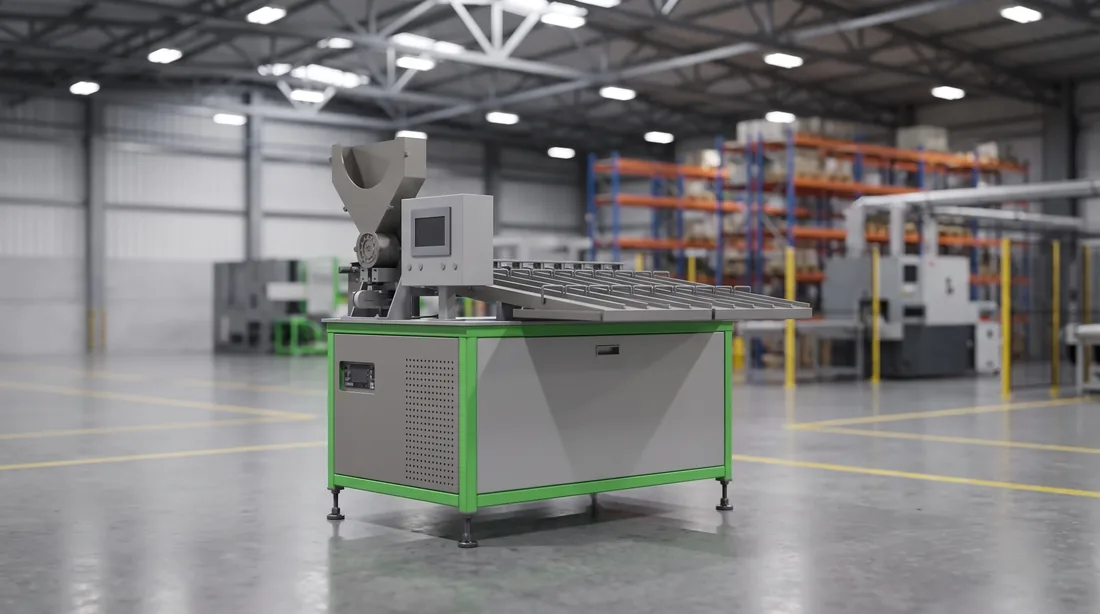
Four of the eight are impossible before shipment, and none of the four is impossible for a bad reason. They are impossible because the thing being measured does not exist yet: your parts, your supply, your people, your building.
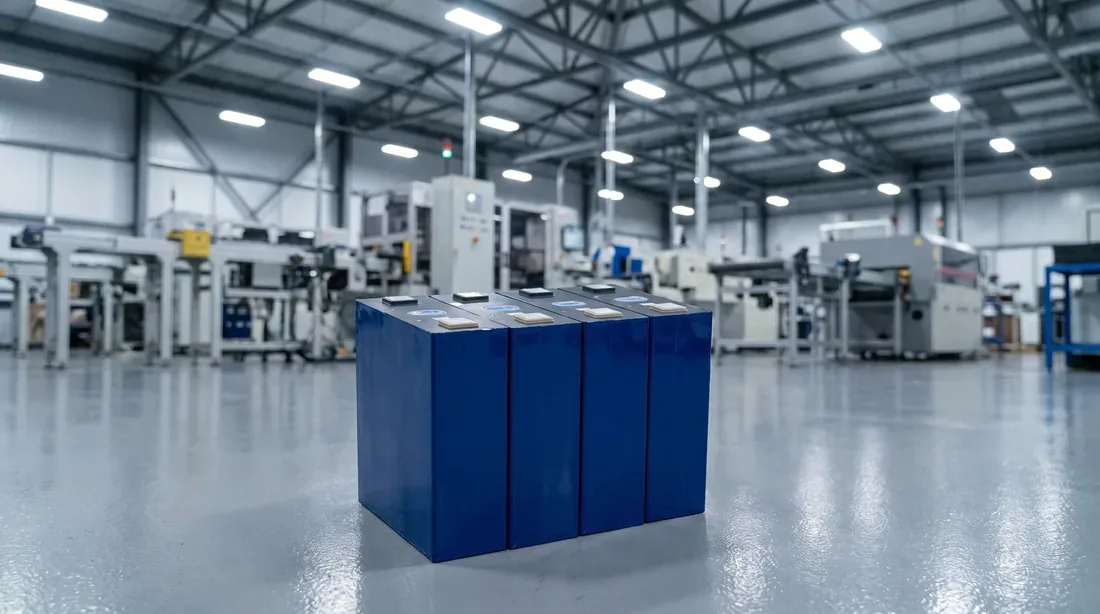
That is also why we do not publish a works-test protocol. A protocol printed in advance would imply those four are covered — the most reassuring untrue thing we could put on this site.
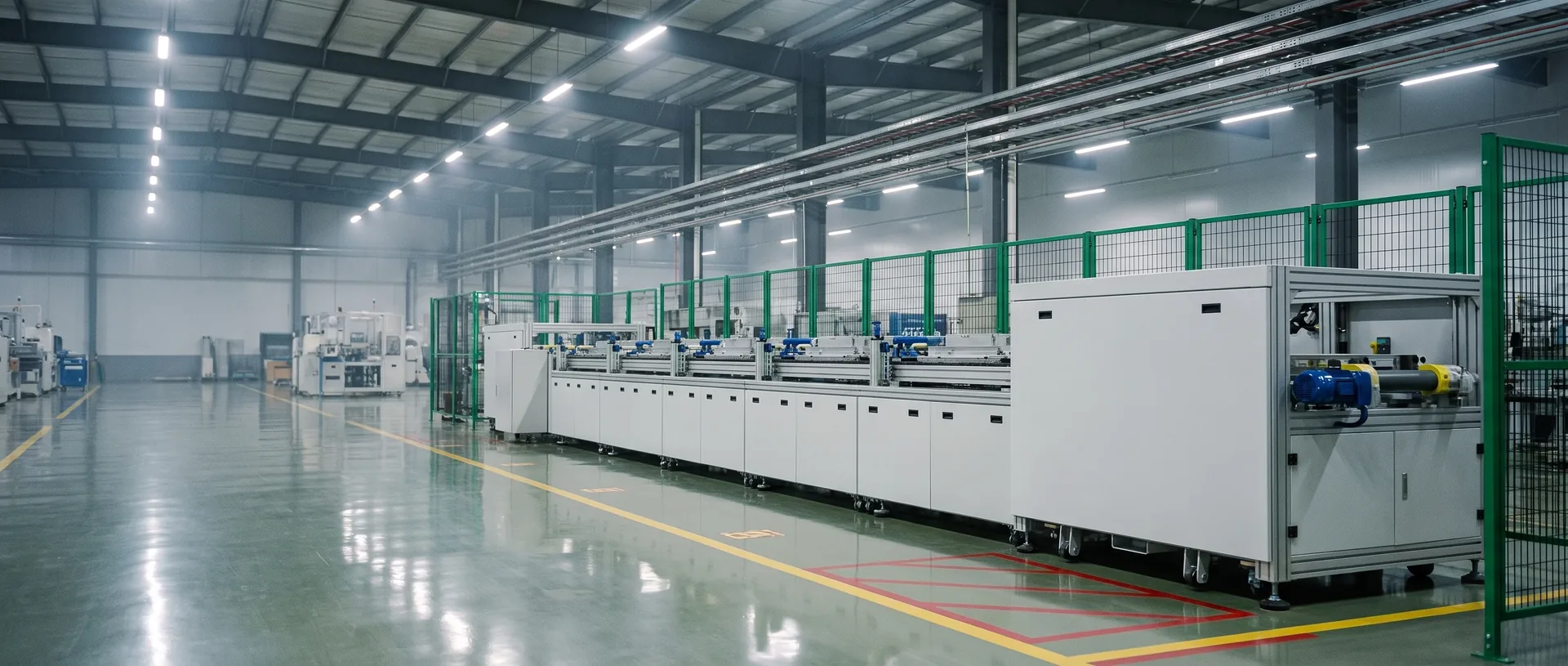
Read the table as a planning document: everything in the right-hand column has a prerequisite in your building, and every prerequisite has a lead time.
Four criteria, and the moment each one stops being negotiable
⚠️ Read the right-hand column, not the left. What separates suppliers is not which criteria exist — it is how early each one is fixed.
| Criterion | When it stops being negotiable |
|---|---|
| Line acceptance yieldWith its exclusions | At quotationBefore anything is ordered, exclusions stated with the figure. A criterion introduced after equipment ships is a negotiation. |
| Published station thresholdsWhere they exist | At quotationPrinted in advance, unrounded, on the page that owns each station. |
| Station criteria set with your partsWhere a figure needs an object | At layoutOnce your enclosure, plate and module drawings exist — and before the line is built, not during ramp-up. |
| Utility conditions the run happens underSupply, air, nitrogen, floor | Before commissioningLive and verified in your building, not connected on the morning of the run. |

Take this to any supplier
"For each of these four, tell me the step at which it is fixed — and whether anything on the list is still open when the line ships."
Every row above is fixed before the event it will be judged at. That is the whole of it. A criterion still open on the day it is measured is not a criterion, and the argument for putting it in the quotation rather than agreeing it at commissioning is made once, on the about page.
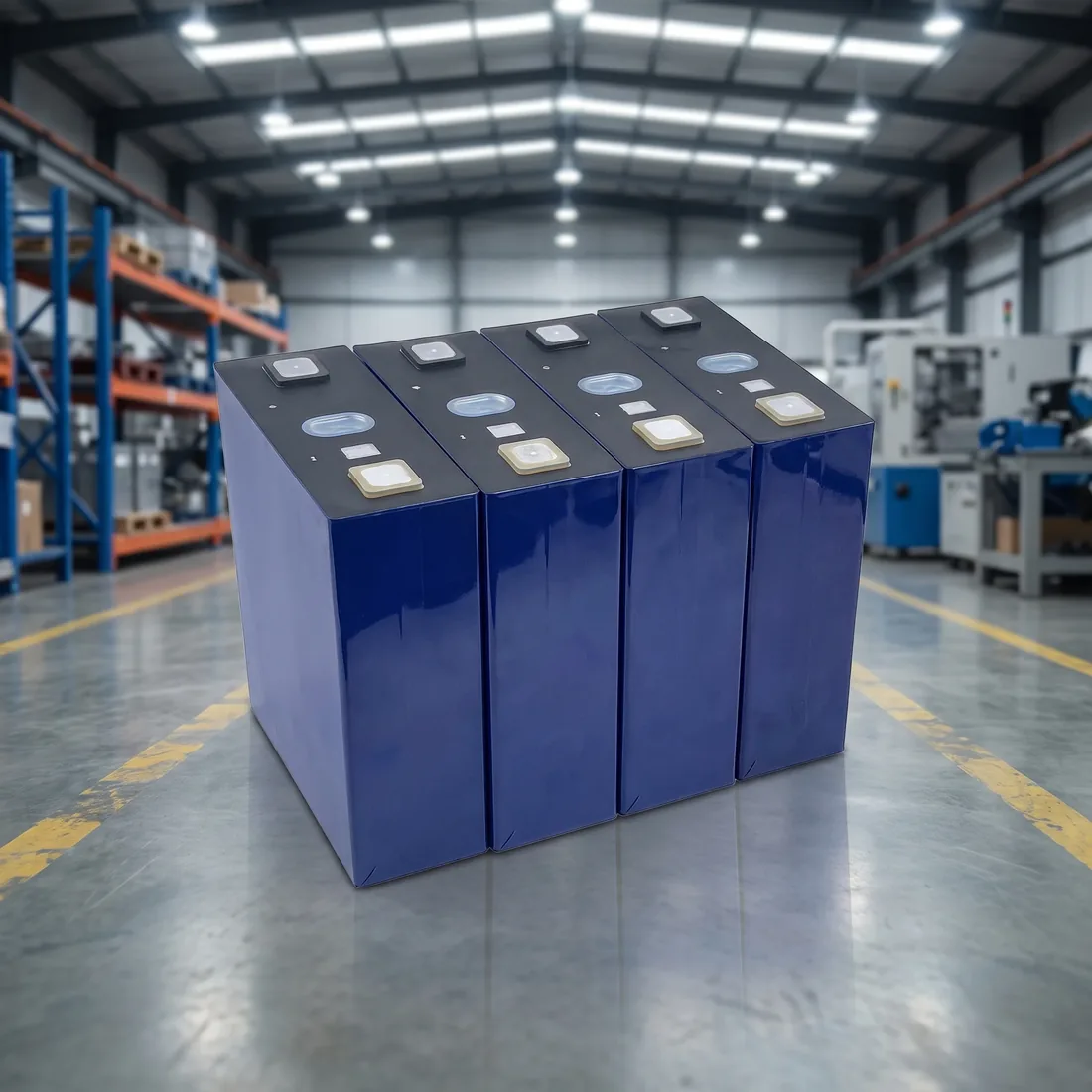
What this page covers, and the parts owned by other pages
Acceptance touches four other subjects on this site. Each is stated once, and this page borrows rather than restates — the same discipline the acceptance document itself needs.
This page owns the sequence and the division of work
The test criteria are owned elsewhere
The definitions are owned elsewhere
The building side is owned elsewhere
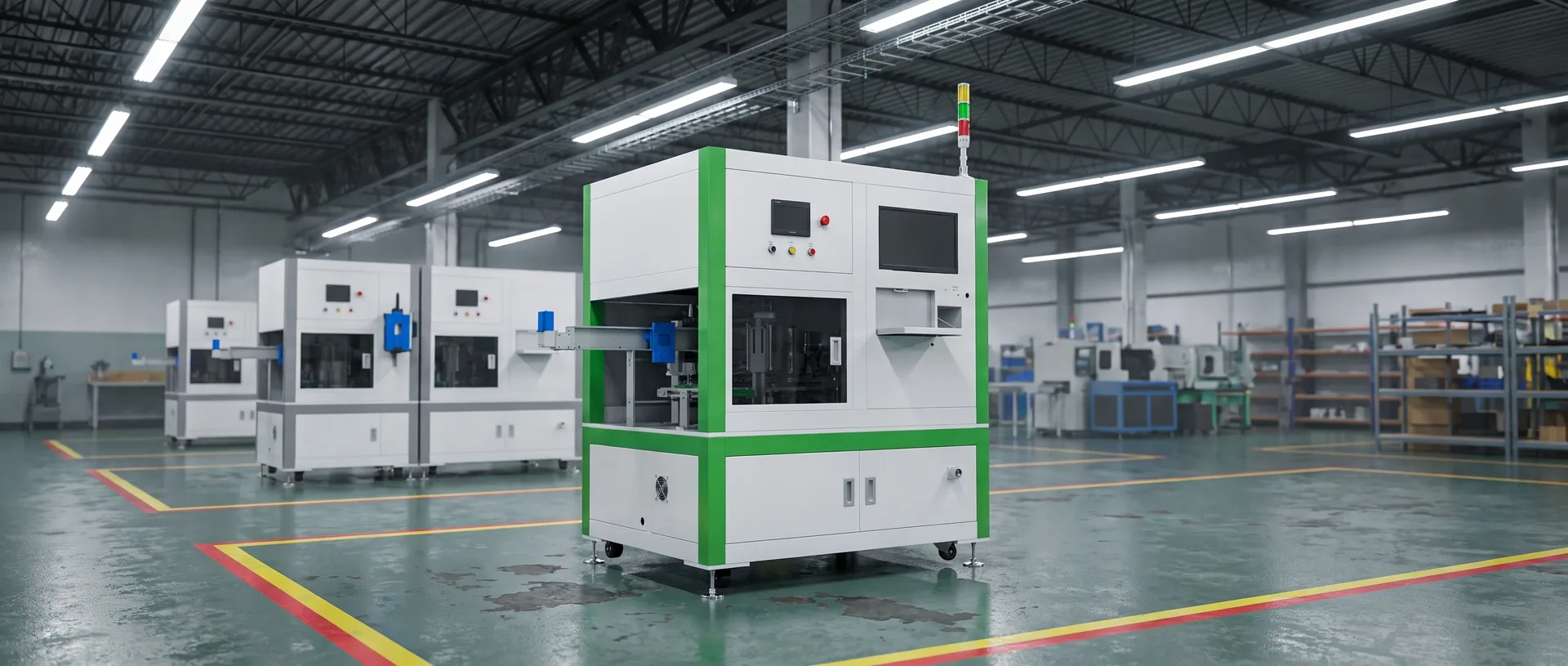
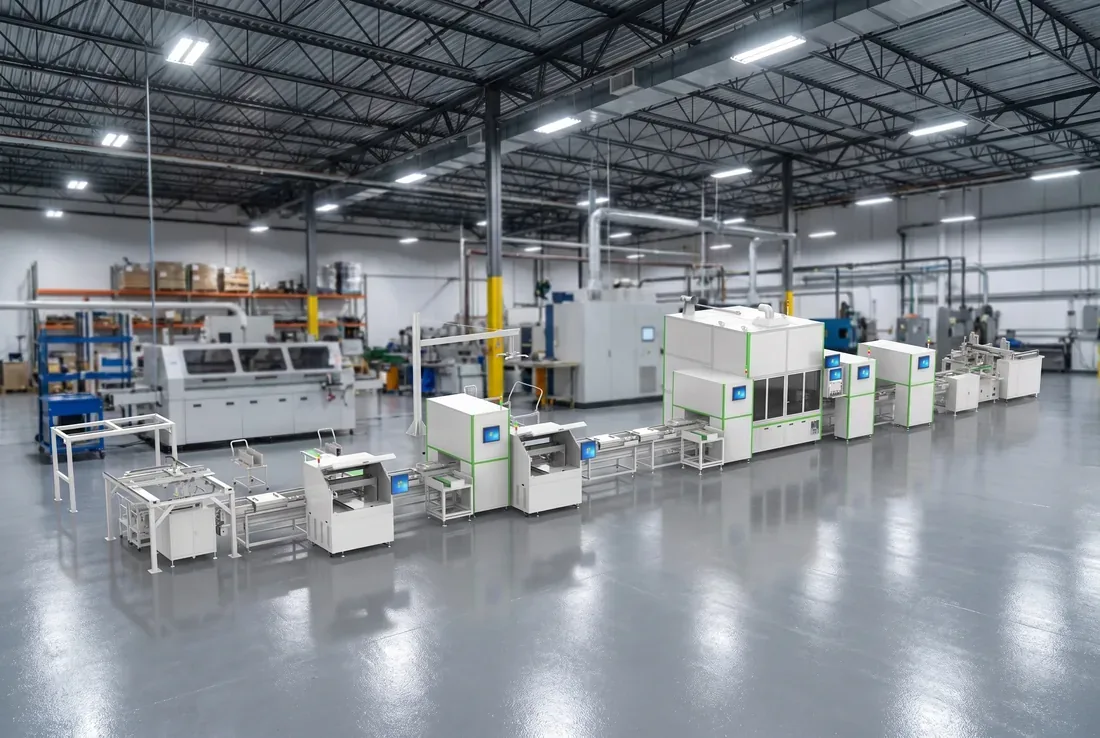
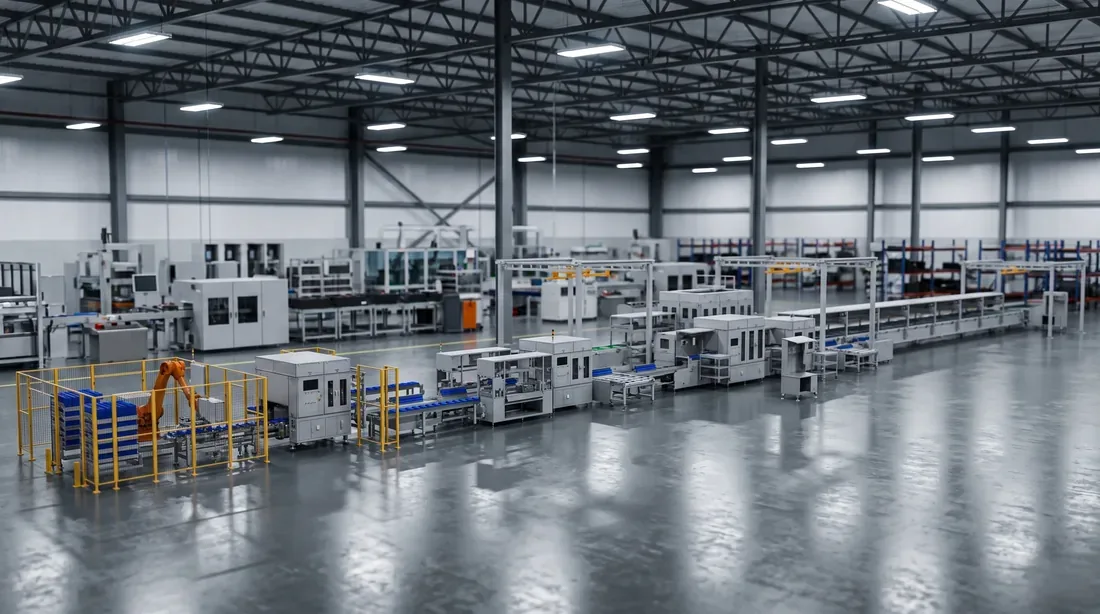
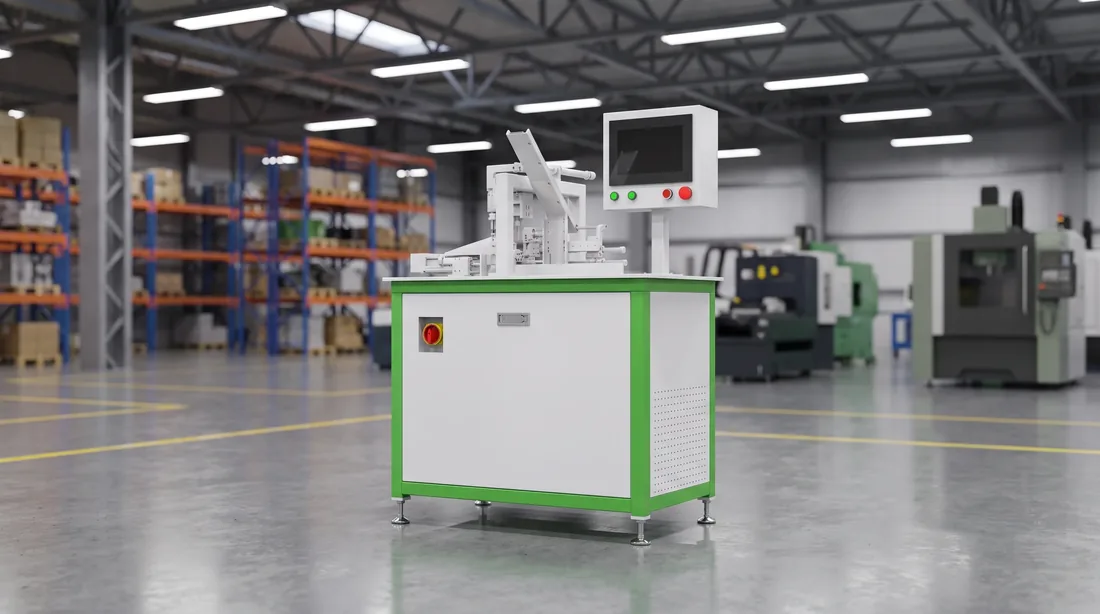
A test in our building proves our building. The figure you signed for is a statement about yours.
Our floor
Your floor
The gap between them
Eight steps, in order, with what is fixed at each
Three of these carry published content and five are agreed with you. The badge on each says which — the same two-state distinction the end-of-line testing page uses for thresholds.
- 01Criteria fixed at quotation — the line figure and the published station thresholds are in the quotation before anything is orderedPublished
- 02Layout agreed to your building — drawn into your bay against the four utility services and the clear height it needsAgreed with you
- 03Line built and set to work at our works — scope of the works test agreed in writing before it happens, not implied by the word FATAgreed with you
- 04Shipment and installation — machines set, aligned and connected on your floorAgreed with you
- 05Utilities connected and verified — against the figures for your configuration: supply form, compressed air, nitrogen and floor loadingPublished
- 06Commissioning with your parts — your cells, your enclosure, your cooling plate, your BMS. Sample parts are for step 03Agreed with you
- 07The acceptance run — measured against the figures from step 01 and recorded in the acceptance documentPublished
- 08Operator and maintenance training — on the line that was just accepted, with the people who will run itAgreed with you
The order is not decorative. Steps 05 and 06 are the two that most often slip, and both slip for reasons that live in your building rather than in our scope — which is why they are named here rather than folded into a word like commissioning.
Take this to any supplier
"Mark this sequence up for our project: which steps are published, which are agreed with us, and which two do you expect to slip?"
⚠️ Steps 02 and 05 both depend on figures that live on the layout and utilities page — the building is the only input on this list that neither side can produce quickly.
Why the badges matter more than the order
Why we will not print a works-test protocol, and what we do instead
This is the part buyers most want a document for, and the part where a document would be least honest. It gets the long answer because the whole page depends on it.
- 01 · Why this matters
A works test is bought as insurance, and it does not insure the thing you are worried about
What keeps a buyer awake is not whether the machines switch on. It is whether the line makes rate with their cell, in their building, at the yield they promised somebody upstream. A works test is structurally unable to answer that — and the more thorough it looks, the more it feels like it did. - 02 · What goes wrong
Both sides can be right and the line can still be short
Sign off in our building and the commercial event is behind you. Then your cell arrives, your supply sags at full load, your operators meet the line for the first time — and every one of those is outside what was tested. Nobody lied. The test simply never had those inputs. - 03 · What we do instead
We split the eight questions and put each one where it can actually be answered
That is section 02, and it is the whole method. The works test covers what a works test can cover — build to drawing, station list, machine function on sample parts — and its scope is written down for your project before the line ships. It is not implied by the acronym. - 04 · Why the qualifier settles it
"Equipment-caused defects only" is a production statement, and production needs your parts
A yield figure that excludes human factors and incoming cell defects can only be measured where those two things exist and can be separated from equipment behaviour. That is a running line on your floor. The qualifier does not just define the figure — it locates it. Where the figure and its exclusions are stated → - 05 · If a supplier offers the opposite
Ask which of the eight questions their works test answers
A protocol that claims takt and yield before shipment is claiming to have measured something with your parts, and your parts were not there. ⚠️ That is worth one email, and the answer tells you more than the protocol would have.
The published thresholds themselves — which stations, which figures, and which are set with your parts — are on the end-of-line testing page and are not repeated here.
Take this to any supplier
"Which of the eight questions does your factory acceptance test actually answer, and where is the yield figure measured?"
What a works test is genuinely good for
Two lists, and the acceptance run needs both of them complete
Most acceptance dates slip on the right-hand list rather than the left. It is published here so it can be planned against rather than discovered in the week it is needed.
- 01The line, installed, aligned and connected
- 02The criteria from the quotation, unchanged
- 03Commissioning engineers, and the parameter records behind each station
- 04The acceptance document, and training after it is signed
- 01Utilities live and verified — supply, air, nitrogen, floor
- 02Production parts in production quantity — cells, enclosures, cooling plates, BMS
- 03The people who will run the line, available for the run and the training
- 04Whoever signs, present in the building on the day
The second list is not administrative. A run using ten hand-picked cells is a demonstration; a run using production cells in production quantity is an acceptance — and the difference between those two is the only reason the figure means anything afterwards. What your building has to have ready is published on the layout and utilities page.
The prerequisite that decides the date is in your building
Every item on your side of the list has a lead time somewhere else in your organisation, and two of them have lead times measured in months.
Utilities are the long one
Production parts are the awkward one
People are the invisible one
None of this is a disclaimer. It is the part of the schedule a supplier can see coming and the buyer usually cannot, and putting it on a public page is the cheapest possible way to say it.
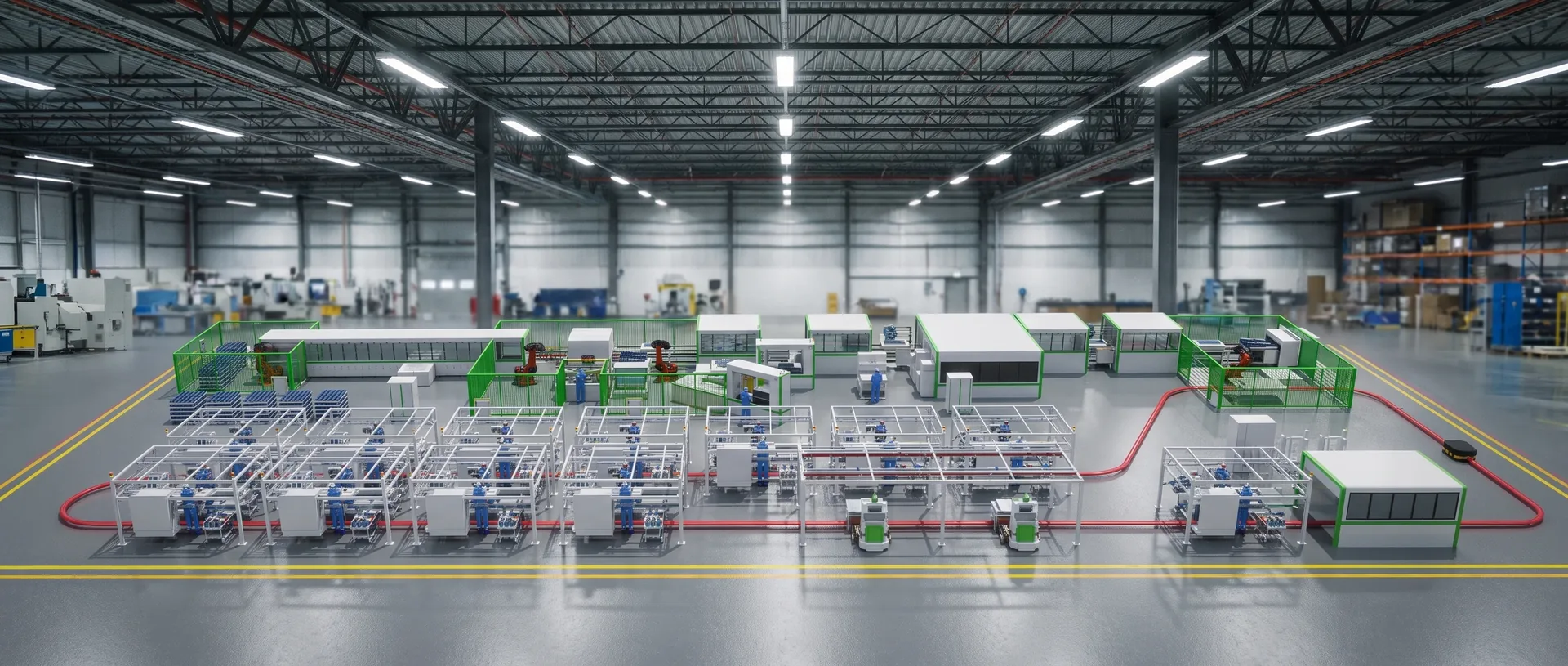
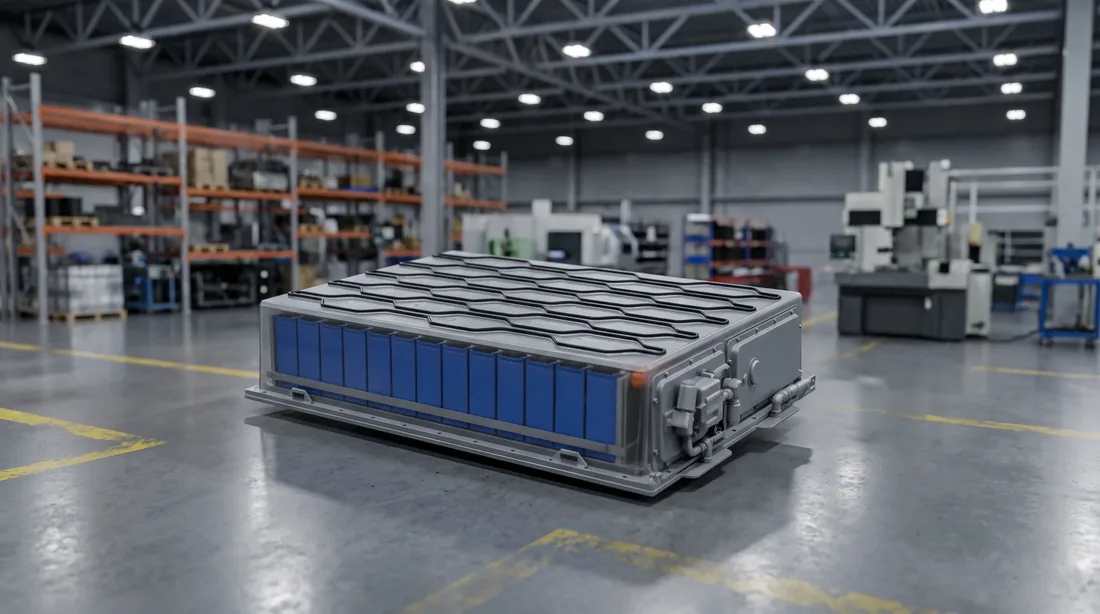
Training happens after acceptance, on the line that was accepted
Two audiences, and they need different things. Running a line and keeping it running are separate skills, and a single session addressed to both serves neither.
- 01Operators — the stations they will stand at: what each position does, what a normal cycle looks like, and what to do when it is not normal
- 02Operators — the manual positions in particular, because the pack segment is mostly hand work and hand work is where training and takt meet
- 03Maintenance — the parameter records: which settings define each station's accepted state, and how to tell something has drifted from it
- 04Maintenance — what is a task and what is a call: where the line ends and the phone starts, stated plainly rather than discovered
Training on a line that has just passed its acceptance run has an advantage nothing else does: the line is in a known good state, and everybody in the room watched it get there. A session delivered before acceptance is a session about a line nobody has seen work.
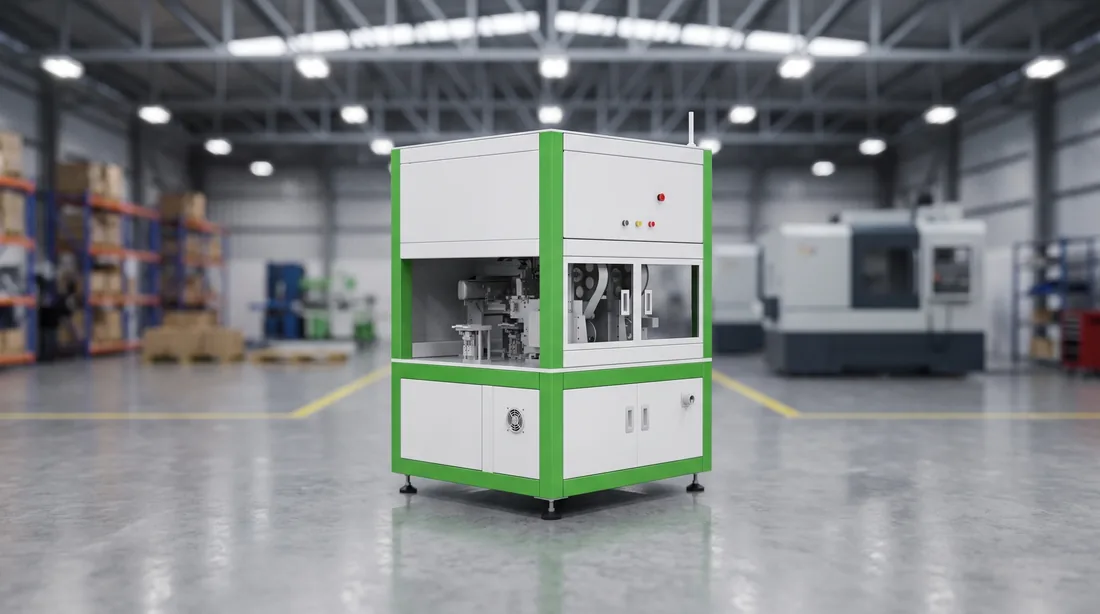
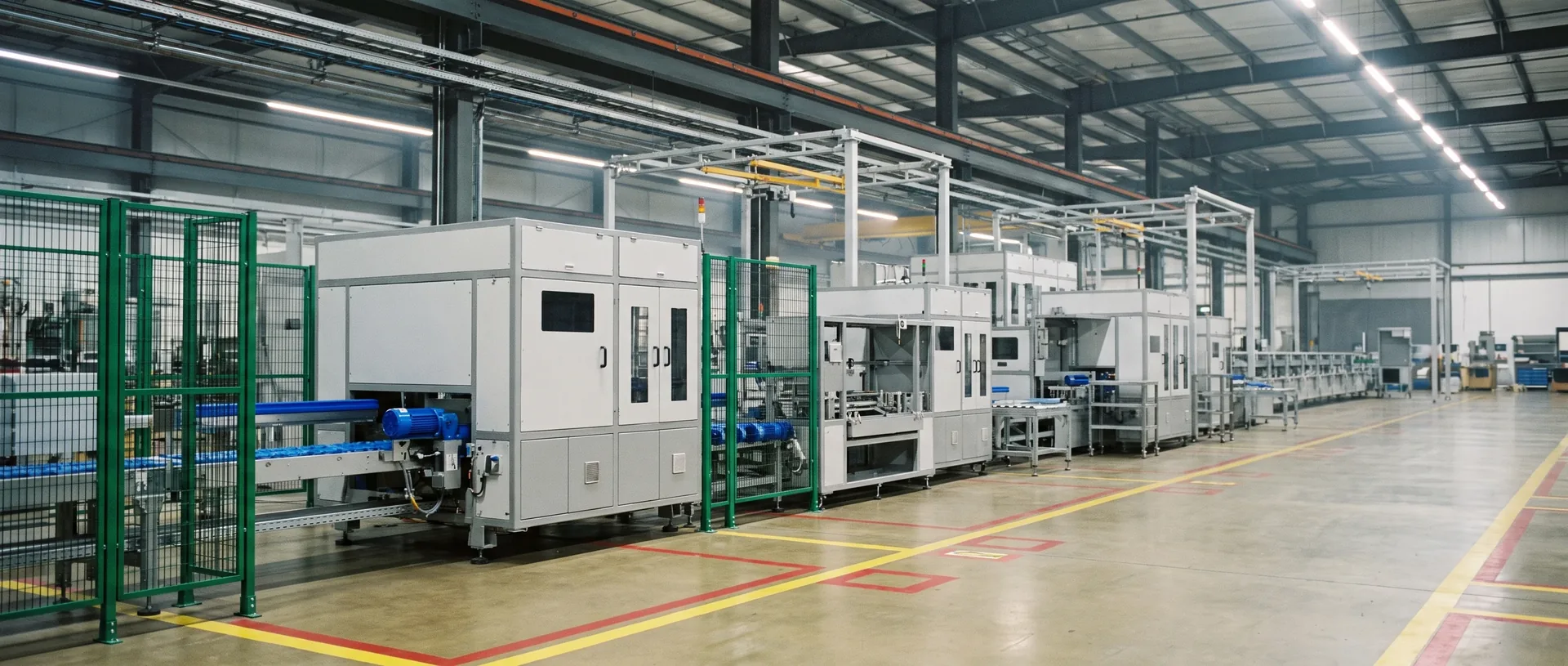
Three honest outcomes, and renegotiating the figure is not one
An acceptance run that does not pass is a normal event in industrial projects. What separates suppliers is whether the three possible causes were separable before anybody argued about them.
| What the shortfall traces to | Whose actionAnd what happens next | Why it is separable at allThe qualifier is doing the work |
|---|---|---|
| Equipment behaviour | OursCorrected, then the run is repeated | The figure counts equipment-caused defects only, so this is the case it was written for |
| Incoming parts | YoursOutside the figure by definition, and in writing before the run | Cell and component defects were excluded when the criterion was agreed, not on the day |
| Human factors | SharedUsually training, sometimes a position that needs re-planning | Also excluded by the qualifier — which is exactly why it can be discussed without threatening the number |
Four things you will look for here and will not find
Three of them are ours and not yet published; one is not printable in principle. Saying which is which is more useful than a page that pretends otherwise.
 01
01 A works-test protocol
02 A delivery date
 03
03 A warranty period
 04
04 Payment terms
Two of these four are gaps we intend to close and two are things a public page should never carry. A supplier who prints all four confidently has decided that looking complete matters more than being checkable — the same decision that produces a works-test protocol covering things it cannot measure.
Take this to any supplier
"Of the figures missing from your page, which are you willing to put in writing today, and which depend on our drawings?"
› — Two we intend to close
- Lead time — once configuration and tooling scope are settled for your project
- Warranty — a commercial term, and it belongs in the contract rather than here
› — Two that should never be on a public page
- A works-test protocol written before your project exists
- Payment terms — one buyer's negotiation, published as everybody's start
⚠️ The split matters more than the count. A page that leaves four blanks and says why is doing something different from a page that leaves four blanks — and the only way to tell them apart is whether each blank names who answers it.
What actually happens on acceptance day, in six items
Nothing here is dramatic, and that is the point. An acceptance day that contains a surprise is a project where something was left open earlier.
- 01Parts staged and counted — production quantity, not a hand-picked tray
- 02Utilities live since the day before — not switched on that morning
- 03Your operators on the line, not on another job
- 04The run itself — both segments, at takt, against the criteria from step 01
- 05The result read off the same way by both sides, because the definitions were agreed months earlier
- 06Signature — and from that moment the figure is a fact rather than a forecast
The last item is the only one that changes anything commercially, and it is the shortest. Everything before it was decided in a quotation, a layout and a utility schedule — the signature records that the line did what those three said it would. If a supplier's acceptance day is where the negotiation happens, the negotiation was postponed rather than avoided.
The shortest version of this page
"The signature records that the line did what the quotation, the layout and the utility schedule already said it would."
What a quiet acceptance day is evidence of
Ask for the sequence marked up for your project
Configuration, target date, and whether your building is already committed. Three inputs, and the eight steps come back with your dates against them rather than ours.